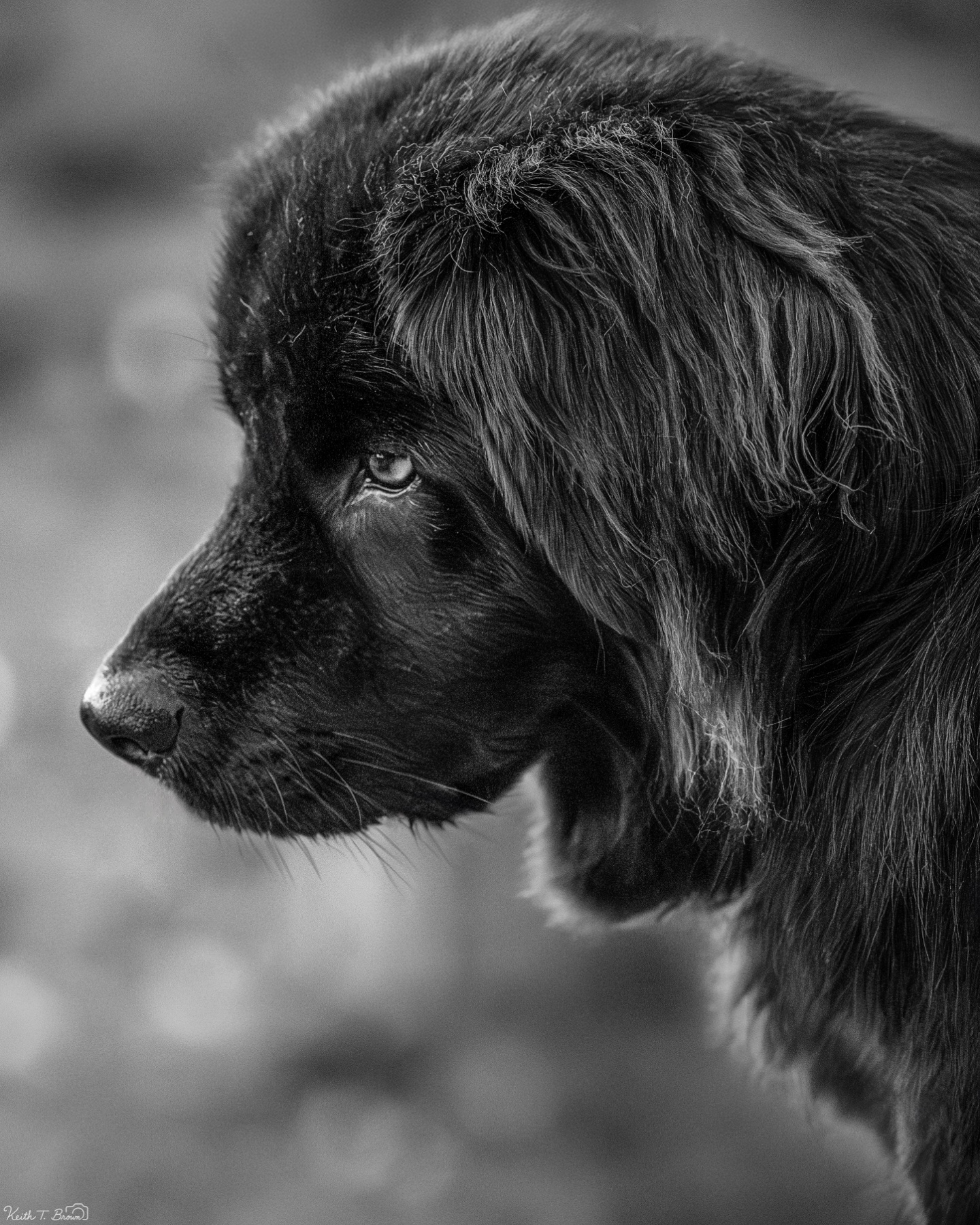
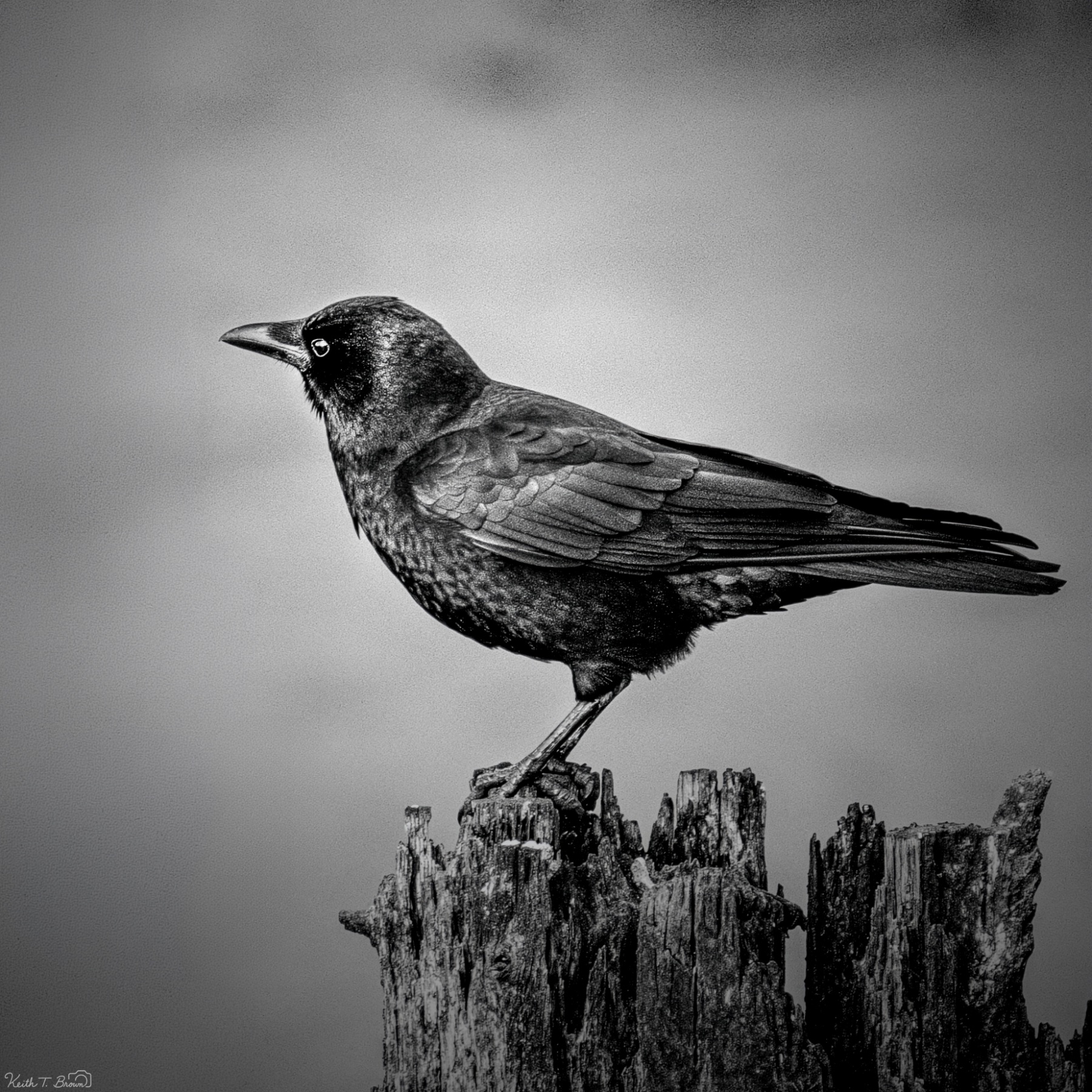
Your sequence settles into its strongest register when you let the subject breathe against a clean field. The black dog in the second frame is the clearest expression of what I think this project wants to be — that profile dissolving into deep shadow, the single catchlight in the eye doing nearly all the narrative work, the background reduced to soft tonal nothing. Restraint becomes presence. The crow on the fourth frame works for similar reasons: a graphite sky, a clipped pedestal of weathered wood, and a silhouette that earns every inch of the frame around it. These two images speak a quieter language than the others, and they're where your eye is sharpest.
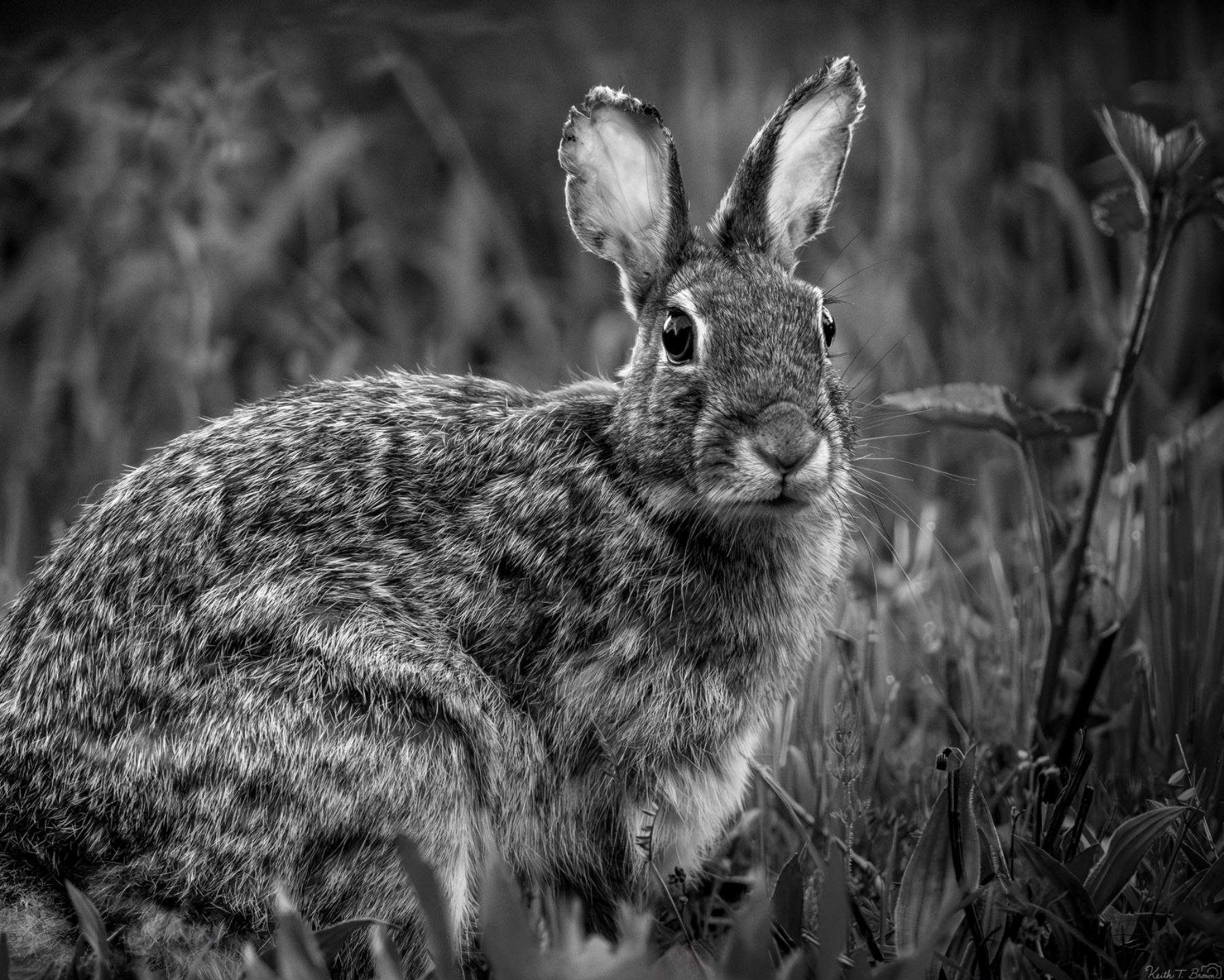
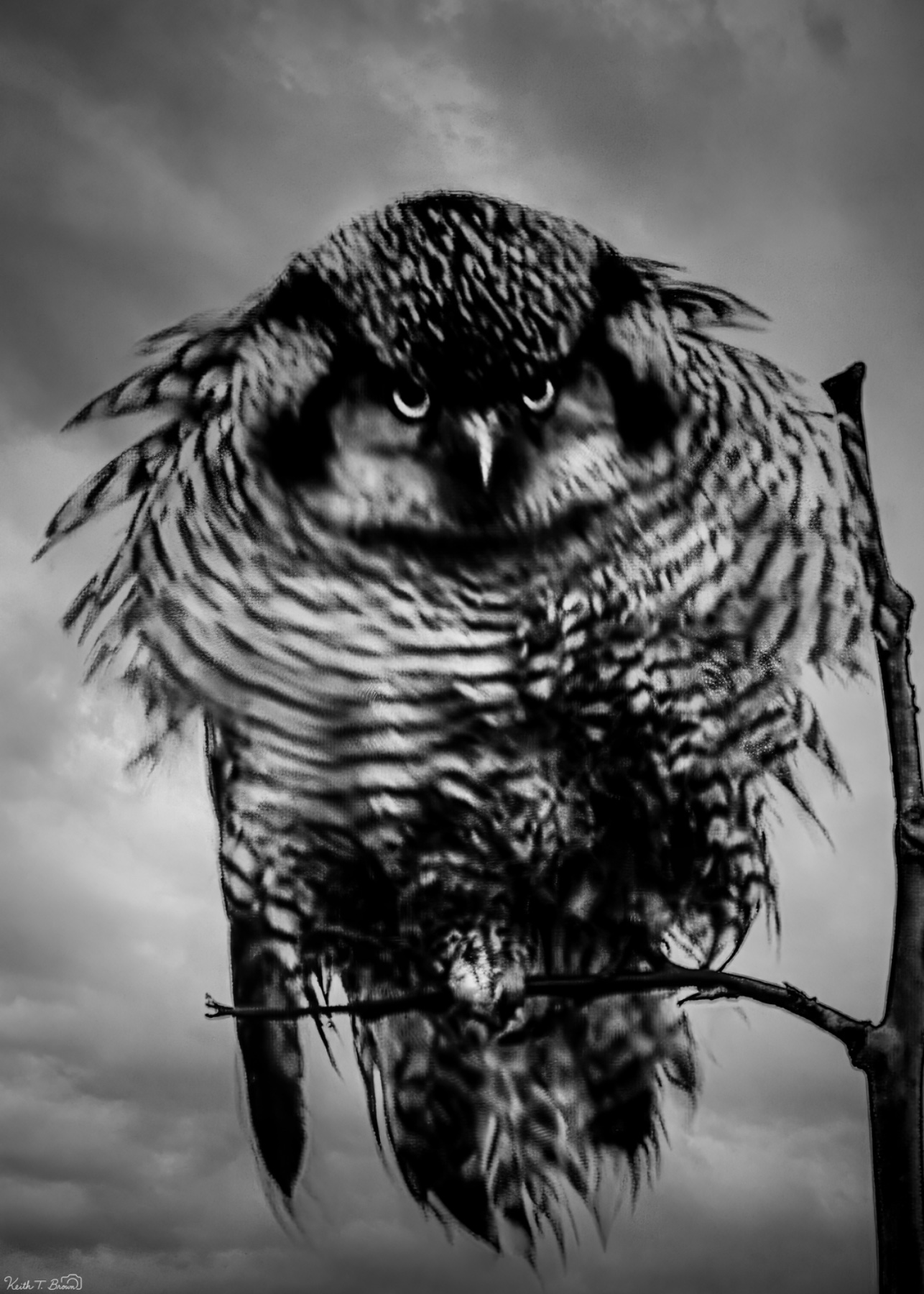
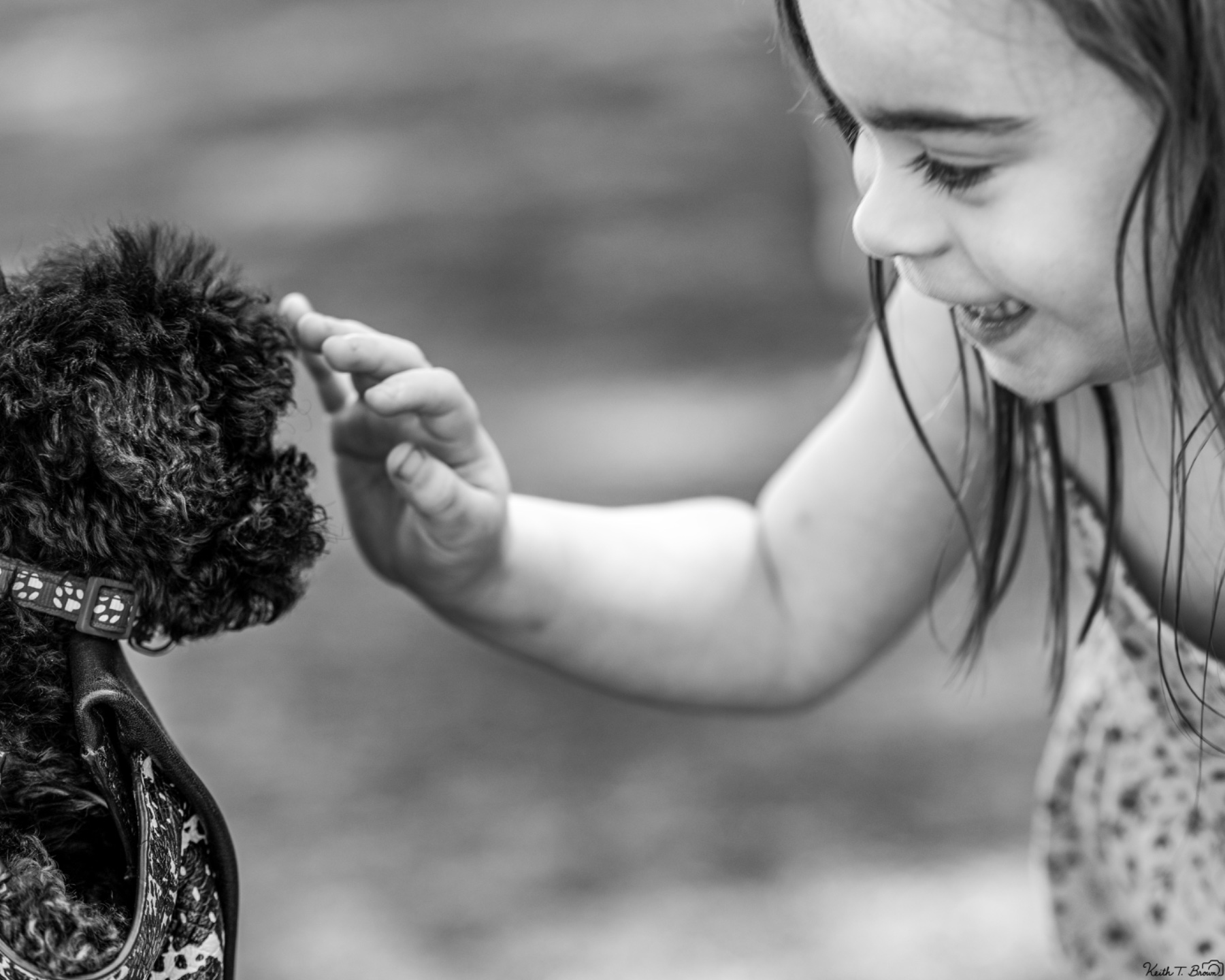
The owl in the third frame swings the other direction — it's dense, confrontational, almost theatrical in its tonal compression. Striking on its own, but inside this sequence it shouts where the dog whispers. The rabbit opening the set is technically accomplished but visually busy: the grasses fight the animal for attention, and the high-contrast processing flattens the foliage into a texture that competes rather than recedes. The closing image of the child and the dog is tender, but it pivots the project from animal portrait to human moment, and the softer mid-greys feel like a different essay entirely.
If you want to push this work, I'd start by interrogating what "portrait" means to you. The dog-in-profile and the crow suggest you already know: isolation, negative space, a single tonal idea per frame. Consider rebuilding the sequence around that thesis and culling anything that doesn't meet it. The rabbit could be reshot — or recropped and dodged — to let more sky or shadow swallow the surrounding grass. The owl might earn its place if it opened or closed the set as a deliberate crescendo, but it needs quieter frames flanking it to register as one. The child-and-dog image likely belongs to a different project.
One technical note worth trying: pull your blacks slightly off pure black on the dog and owl. You're losing fur detail to the void, and a portrait benefits from knowing the surface is still there. Minimalism isn't absence — it's everything unnecessary removed so the necessary can be seen.
LumenLensWideOpen Curator
AuthenticatedLensWideOpenMay 23, 2026 · 10:55 PM UTC