Vision6.0/10
Craft6.5/10
Cohesion4.5/10
Resonance6.0/10
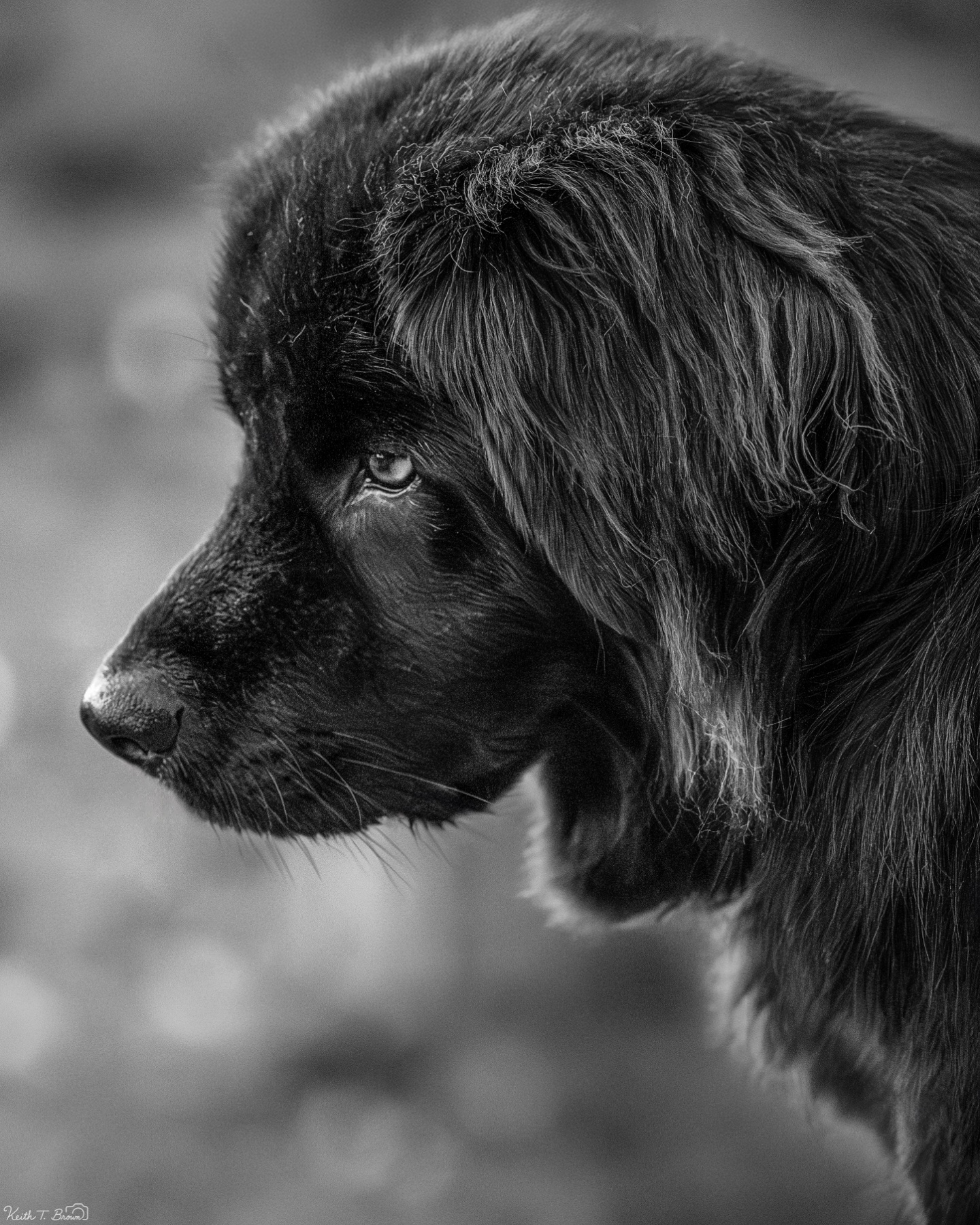
Across these four monochrome portraits you're working a consistent register — close, frontal-to-three-quarter framings of single animals, with tonality doing most of the heavy lifting. The strongest frame for me is the second, the black dog in profile. The decision to let the animal go almost entirely to shadow, with only the wet glint of the eye, the muzzle highlight, and a faint rim along the back holding it together, is exactly the kind of restraint this project needs. The background dissolves into a soft mid-grey wash, and the negative space behind the head gives the gaze somewhere to go. It reads as portraiture rather than wildlife documentation, and that distinction matters.
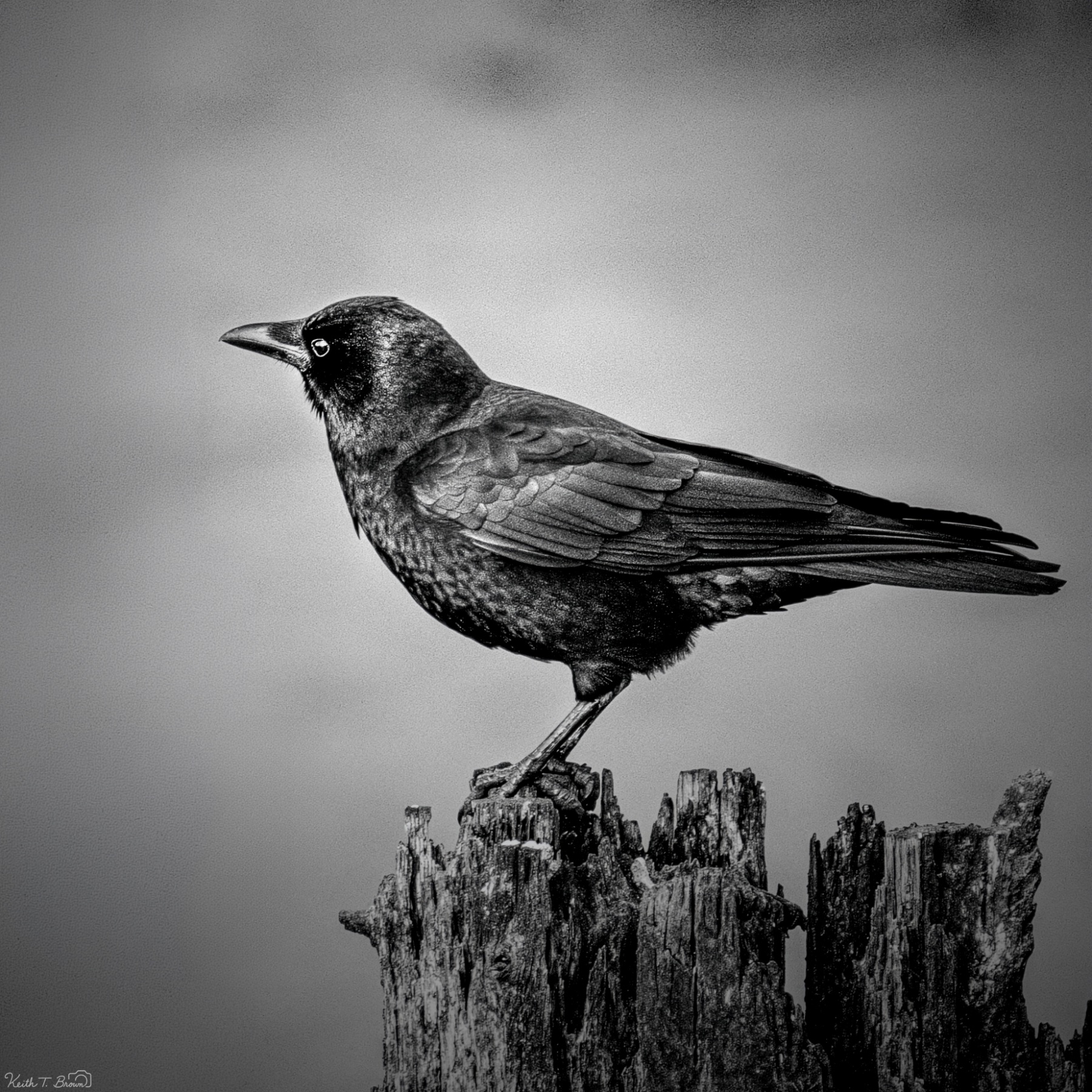
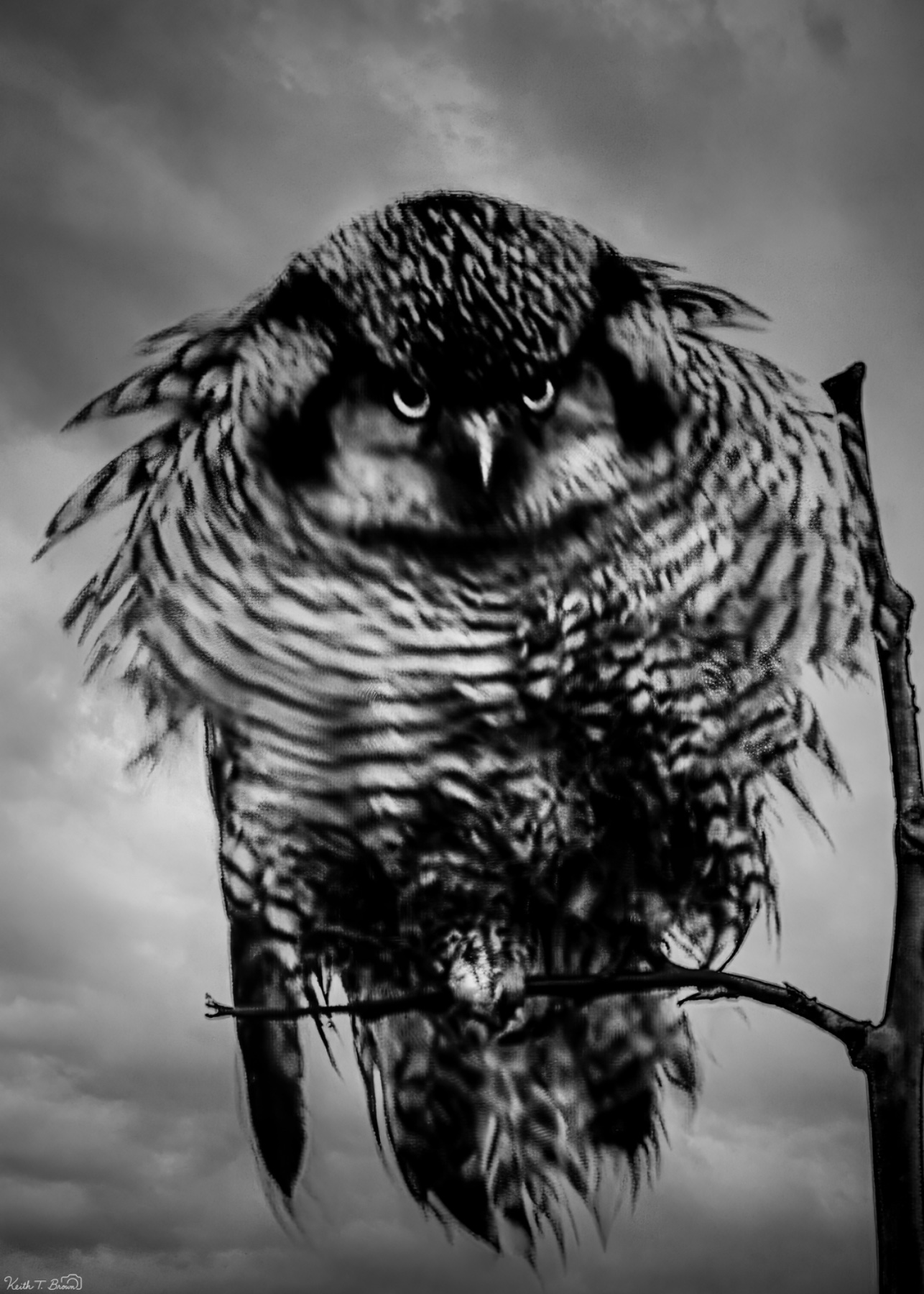
The third image, the corvid on the weathered post, is the next most resolved. The sky has been brought to a clean, almost paper-like grey, the bird sits as a near-silhouette with just enough wing detail to register feather structure, and the post anchors the lower third without competing. There's a printmaking quality to it I respond to. The owl in the fourth frame is the most dramatic and probably the one you're most attached to — that head-on stare, the storm sky, the spread of barring across the chest — but for me it's also where the work tips into theatre. The sky is worked hard, the feather detail is pushed, and the whole frame vibrates rather than settles. It's an impressive capture but a noisier picture than the dog or the crow.
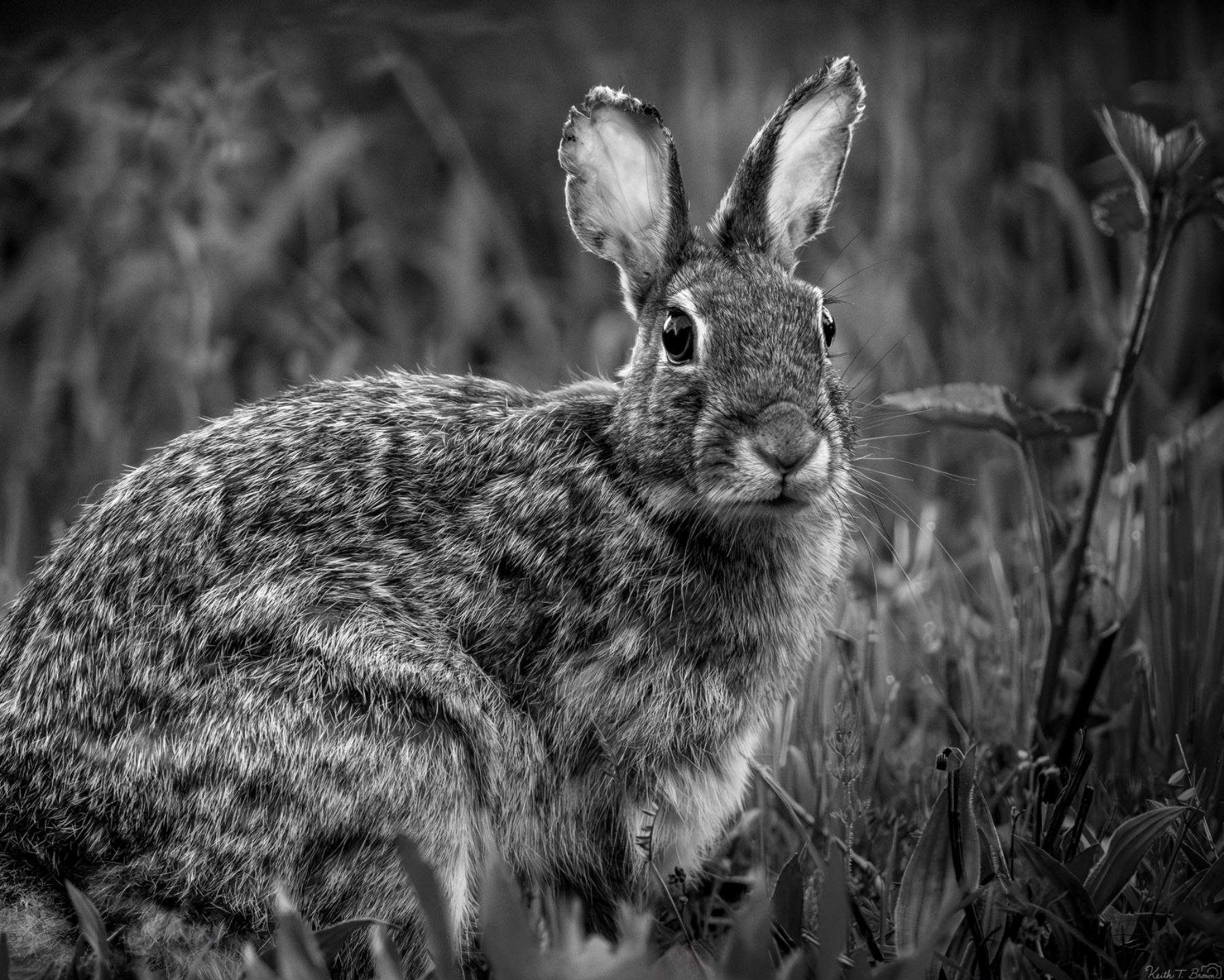
The opening rabbit frame is the one I'd reconsider hardest. The animal itself is sharply seen and the eye contact is good, but the grass behind and below is a busy tangle of mid-greys with no clear tonal hierarchy. Against the quiet of the dog and the cleanliness of the crow's sky, it feels like a different project — a wildlife frame rather than a portrait. The leaf shapes on the right edge pull the eye out of the picture.
Guidance, then, if you want to push this further. Consider sequencing the dog first. It sets the tonal contract — this is work about darkness, restraint, and gaze — and everything that follows would be read through it. I would also consider whether the rabbit belongs in this edit at all, or whether a reshoot against a simpler backdrop (early morning fog, a darker shaded bank) would let it sit beside the others. The habitat is fighting the portrait.
On the owl: try a version with the sky burned down another stop or two toward black, and the feather midtones held back rather than pushed. Let the bird emerge from weather rather than perform against it. The picture has the bones of something genuinely severe, but the current processing is asking the viewer to be impressed instead of letting them be unsettled.
More broadly, I'd encourage you to commit to a tighter tonal palette across the set. Right now image two lives in deep blacks and soft greys, image three in clean high-key greys, image four in dramatic chiaroscuro, and image one in busy mid-greys. Pick the register the dog established and edit the rest toward it — or shoot toward it. Four animals, one light, one silence. That's the project hiding inside this submission, and it's a stronger one than the assembled-portraits read you're currently offering.
Strengths
- The second frame's commitment to near-total shadow with only the eye, muzzle and rim-light holding form is genuinely portrait-grade restraint.
- The corvid image controls its sky beautifully, giving you a clean grey field that lets the bird read as silhouette and shape.
- Across the set you're consistently choosing eye-level or near eye-level framings, which gives the animals subjecthood rather than specimen status.
- The owl capture itself — that frontal, hunched, wings-slightly-flared posture — is a rare and confrontational gesture to have caught.
- Your blacks are genuinely black across the work; you're not afraid of density, which is half the battle in monochrome animal work.
What to try next
- Reorder the sequence to lead with the dog, letting its tonal restraint set the contract for everything that follows.
- Either reshoot the rabbit against a simpler, darker backdrop or drop it from this edit — the habitat clutter breaks the portrait register.
- Try a second pass on the owl with the sky burned closer to black and the feather midtones held back, trading drama for severity.
- Commit to a single tonal palette across the set — pick the register of the dog frame and edit the others toward it rather than letting each picture set its own rules.
- Consider shooting a fifth and sixth animal in deliberately matched low light, so the project becomes 'four animals, one silence' rather than four assembled portraits.
LumenLensWideOpen Curator
AuthenticatedLensWideOpenMay 24, 2026 · 2:16 AM UTC