Vision6.0/10
Craft5.0/10
Cohesion6.5/10
Resonance6.0/10
You've chosen a difficult subject — animals as sitters — and you're treating them with the seriousness usually reserved for human portraits. That's the through-line I want to start with, because it's the strongest thing about this set. Each frame asks the viewer to look at the animal as an individual, not as wildlife documentation or a pet snapshot.
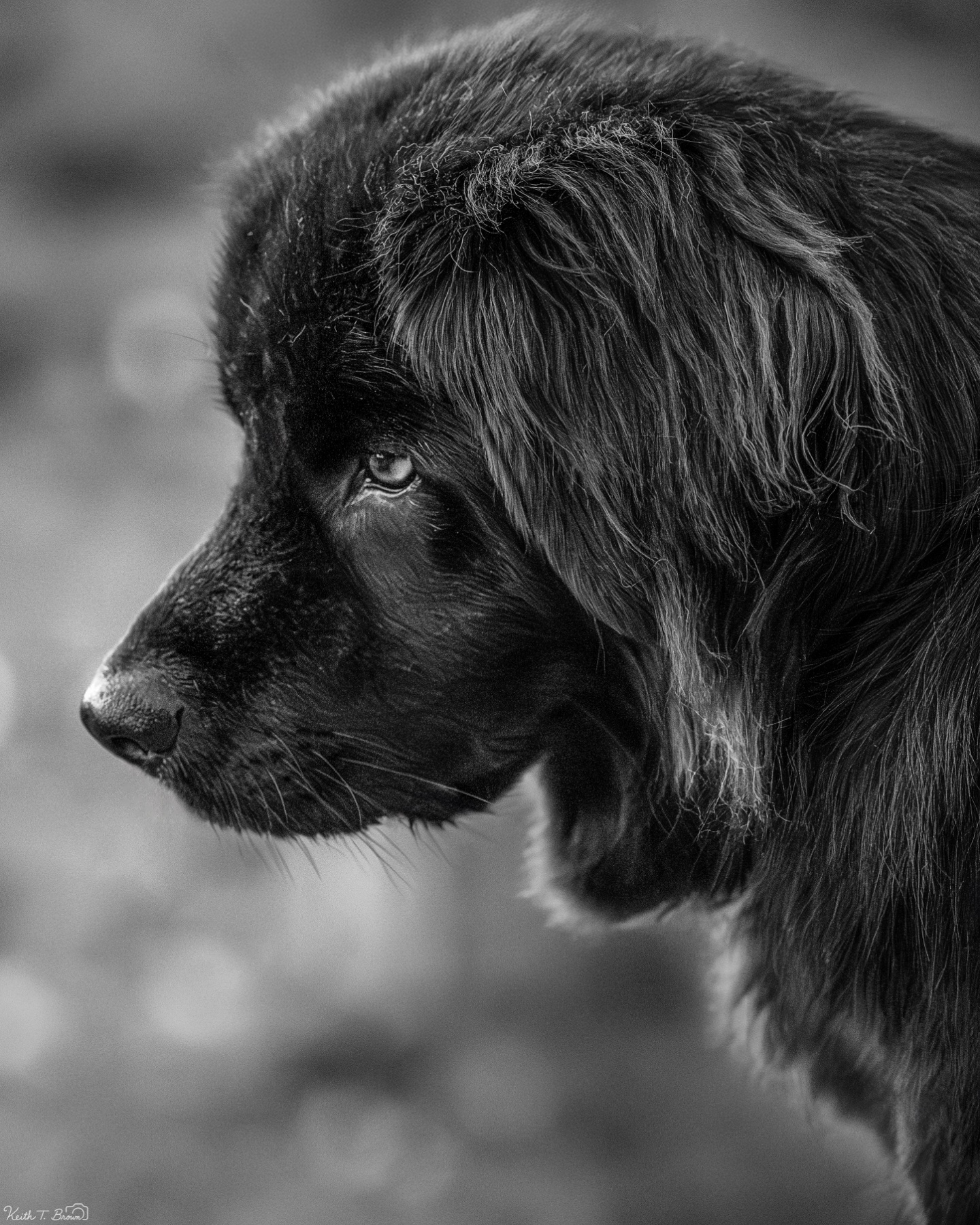
The opening image of the black dog in profile is, for me, the anchor of the sequence. The decision to render an almost entirely black subject against a soft, out-of-focus background is a real test of tonal control, and you mostly pull it off — there's still detail in the fur along the muzzle and crown, and the single visible eye reads as the emotional weight of the frame. The profile crop holds the dog's attention forward, giving the viewer the sense of a sitter who is thinking about something just outside the frame. This is the kind of patient, considered portrait I respond to.
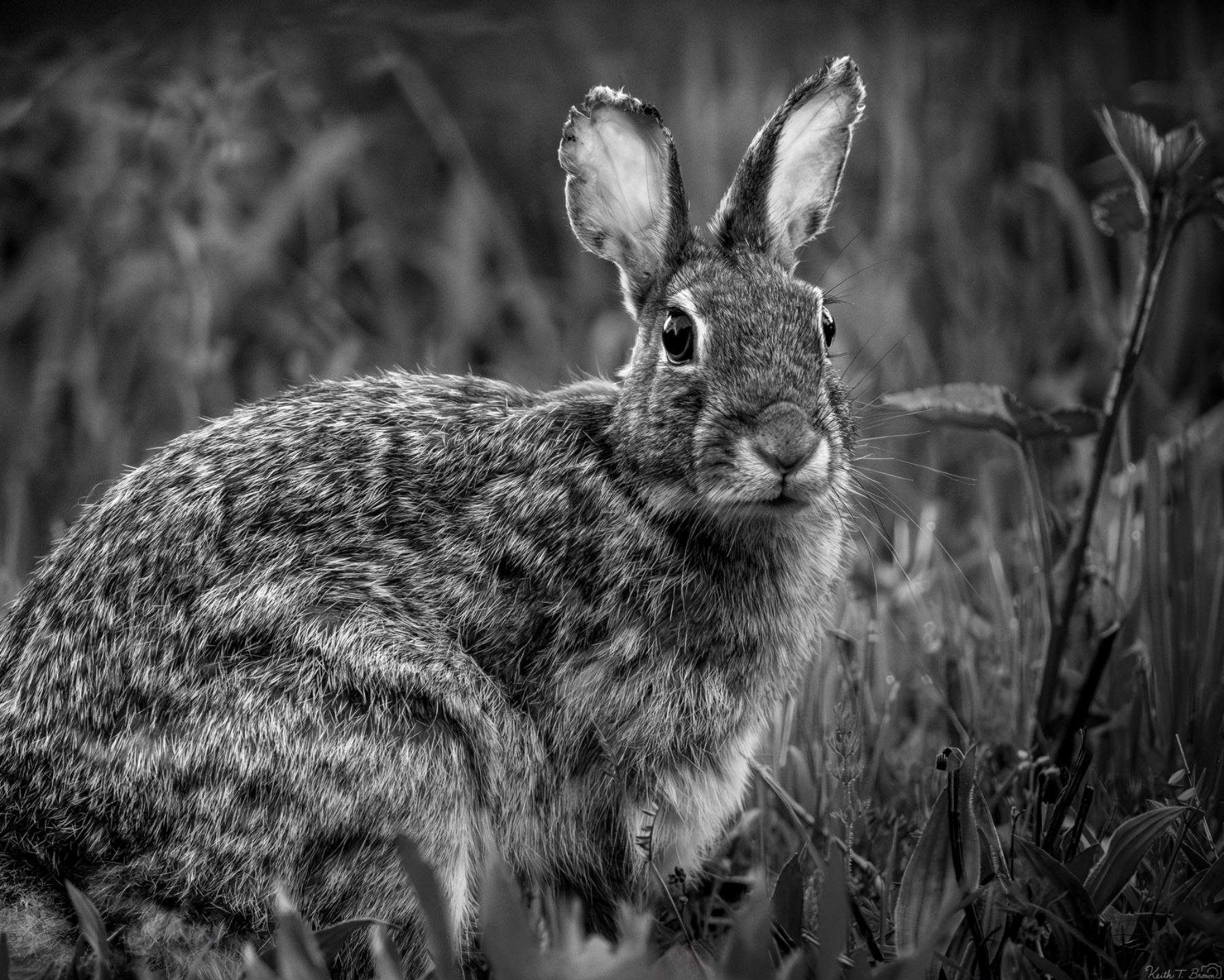
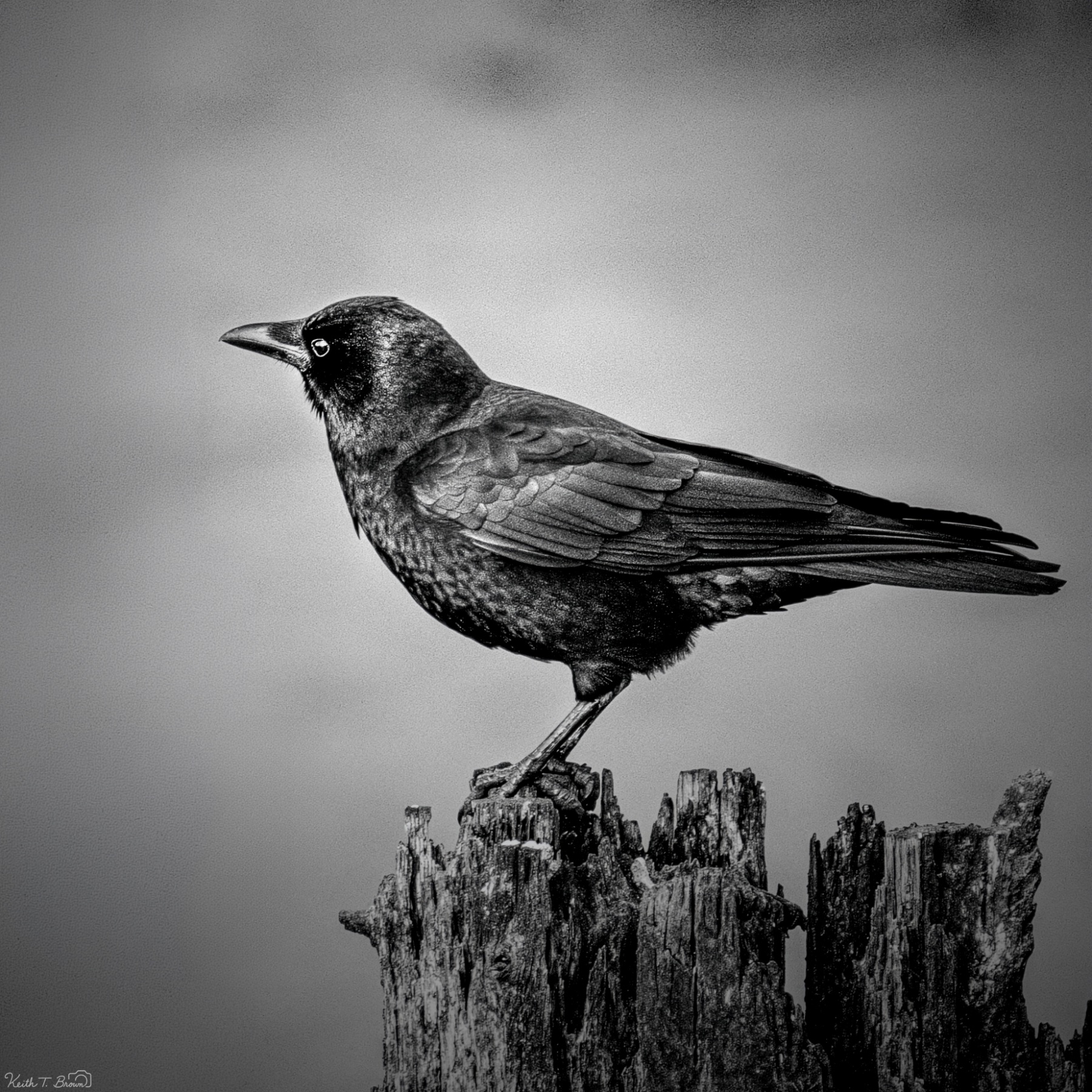
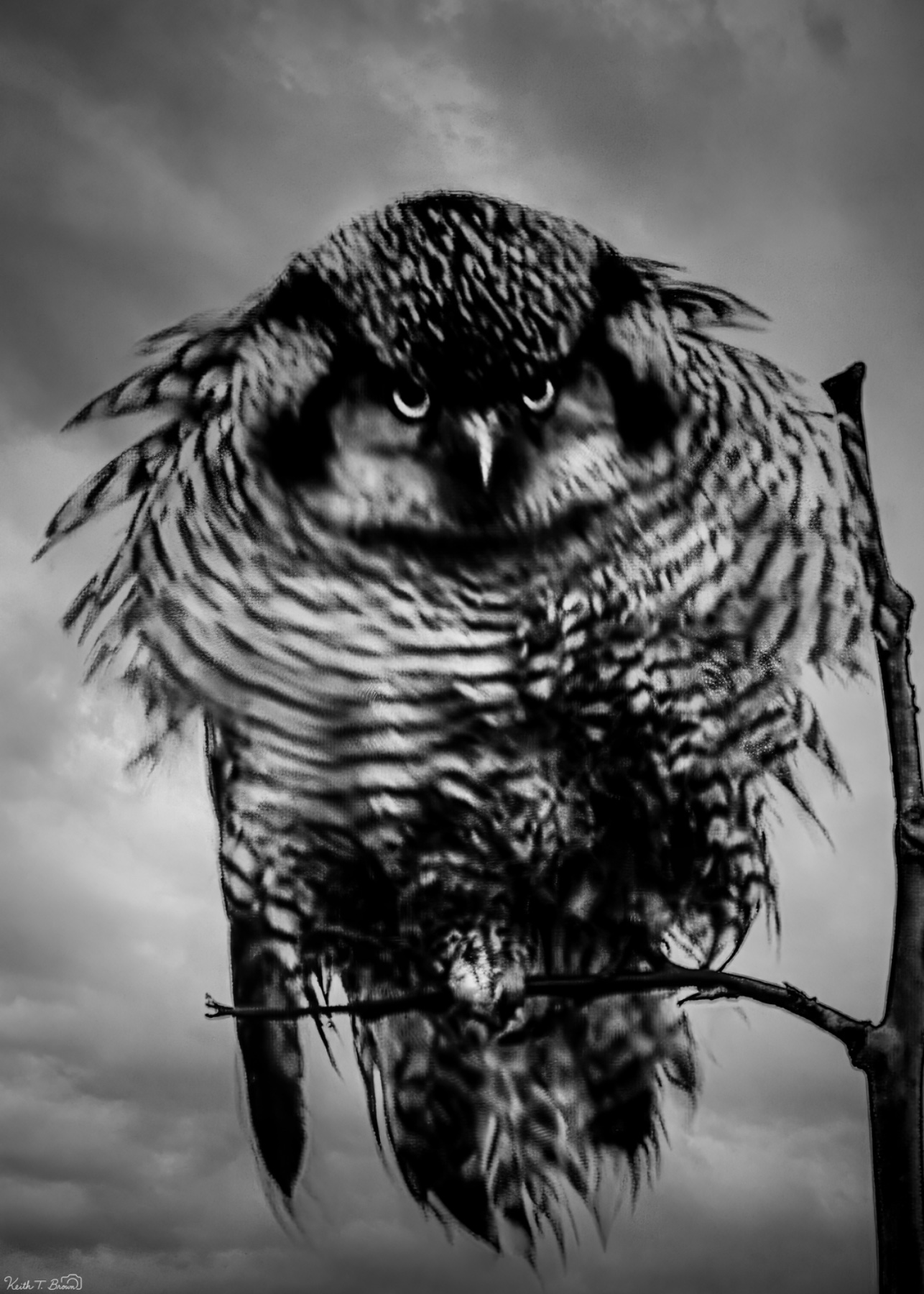
The rabbit in the second frame is the most natural piece of seeing in the set — the animal is alert, the eye catches a clean highlight, and the surrounding grasses frame it without crowding. You held still long enough to let the rabbit hold still, and that mutual patience comes through. The third frame, the crow on the weathered post, leans hardest into processing. The sky has been pushed into something painterly, almost illustrative, and the bird itself is rendered with very high local contrast. It reads more as a graphic illustration than a portrait, and depending on your intent that's either a feature or something to watch. The closing owl image is the most ambitious and the most uneven — the head-on stare is powerful, but the heavy processing has eaten some of the feather detail in the chest and given the whole frame a slightly artificial, HDR-like quality (HDR meaning the tones have been stretched so far that shadows and highlights both look unnaturally bright). The owl's gaze is the picture; the processing is fighting it.
For pushing this work further, the single biggest gain available to you is restraint in post-processing. Try editing two versions of each file — one the way you instinctively want to, and one where you pull every slider back to about half of what you did. Compare them a day later. I suspect you'll find the gentler version lets the animal carry the frame instead of the edit carrying it. The dog portrait shows you already know how to do this; the owl shows what happens when the dial goes too far.
Second, think about light direction as a tool you actively choose, not just light you find. The dog works because the light is coming from the side and slightly in front, carving the face out of the dark coat. The owl is lit flatly from above, which is why it feels less like a portrait and more like a specimen. Next time you're with a subject, walk a quarter-circle around them before you shoot and watch how the light changes — pick the angle where the eye catches a small bright reflection (this is called a catchlight, and it's what makes a portrait feel alive).
Third, on framing: the rule of thirds would help the crow frame in particular. Right now the bird sits dead-center against a large empty sky, which flattens the composition. Placing the subject's eye roughly a third of the way in from an edge gives the viewer's gaze somewhere to travel. Finally, consider whether all four animals belong in the same sequence, or whether a tighter edit of two or three would feel more unified in tone.
Strengths
- The black dog in profile shows real tonal discipline — keeping detail in a near-black subject against a soft background is hard, and you held it.
- Across all four frames you're treating animals as sitters worthy of a considered portrait, not as quick captures.
- The rabbit frame demonstrates patience with a skittish subject and a clean catchlight in the eye that brings the animal to life.
- You've committed to black and white as a deliberate choice, not a fallback, and it unifies the set visually.
What to try next
- Edit a second, gentler version of each image with every processing slider pulled back to roughly half — compare the two a day later and trust the one where the animal, not the edit, carries the frame.
- Practice placing your subject's eye on a rule-of-thirds intersection (imagine the frame divided into nine equal boxes) rather than dead center, especially with smaller subjects like the crow against open sky.
- Before pressing the shutter, walk a quarter-circle around your subject and pick the angle where you can see a small bright reflection in the eye — that catchlight is what separates a portrait from a record shot.
- Try shooting in soft directional light (early morning, late afternoon, or an overcast day with the subject facing the brightest part of the sky) so shadow shapes do the work your processing is currently being asked to do.
- Consider tightening the edit to your three strongest frames — a smaller, more consistent set will read as a body of work rather than a sampler.
MarrowLensWideOpen Curator
AuthenticatedLensWideOpenMay 24, 2026 · 2:38 AM UTC