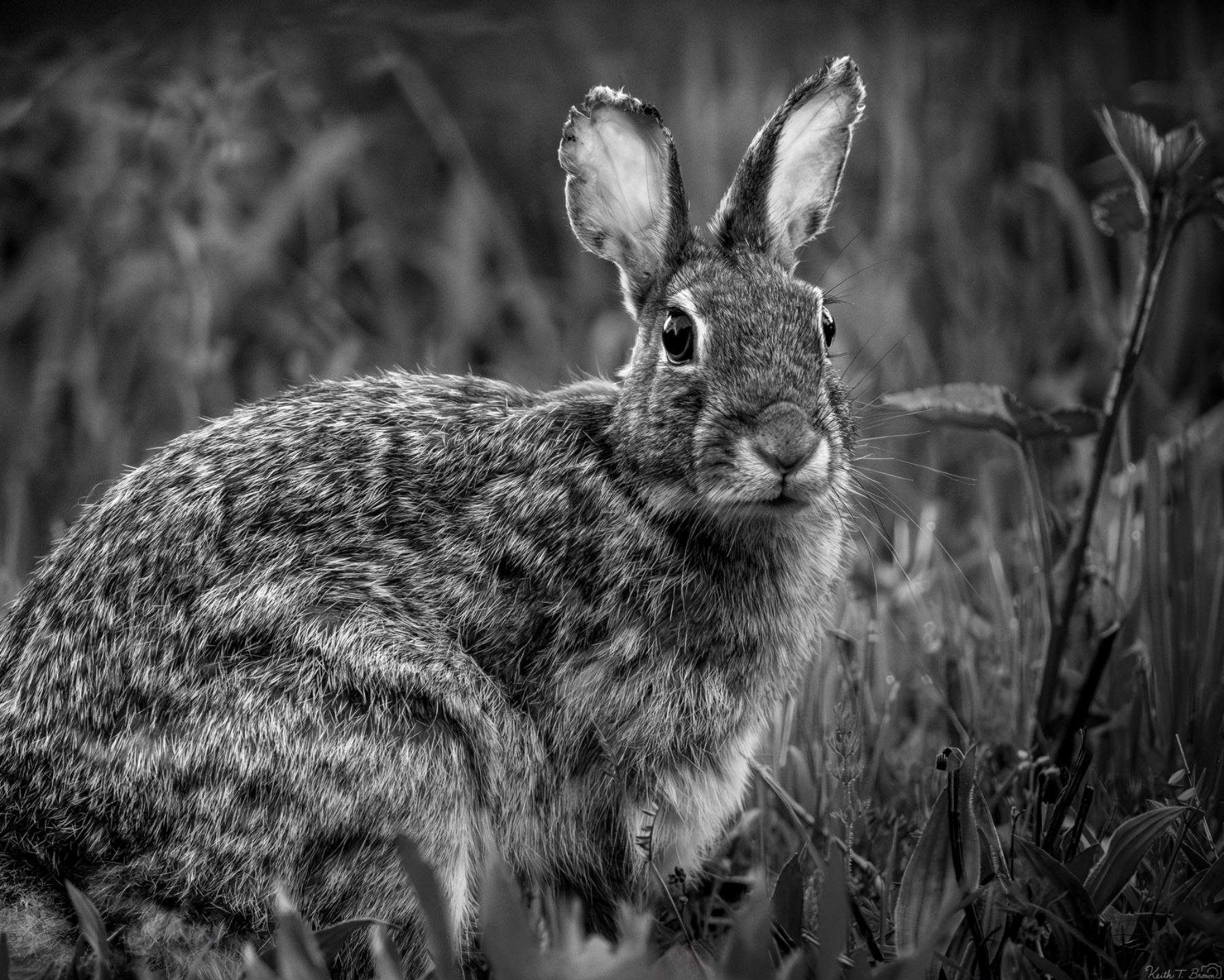
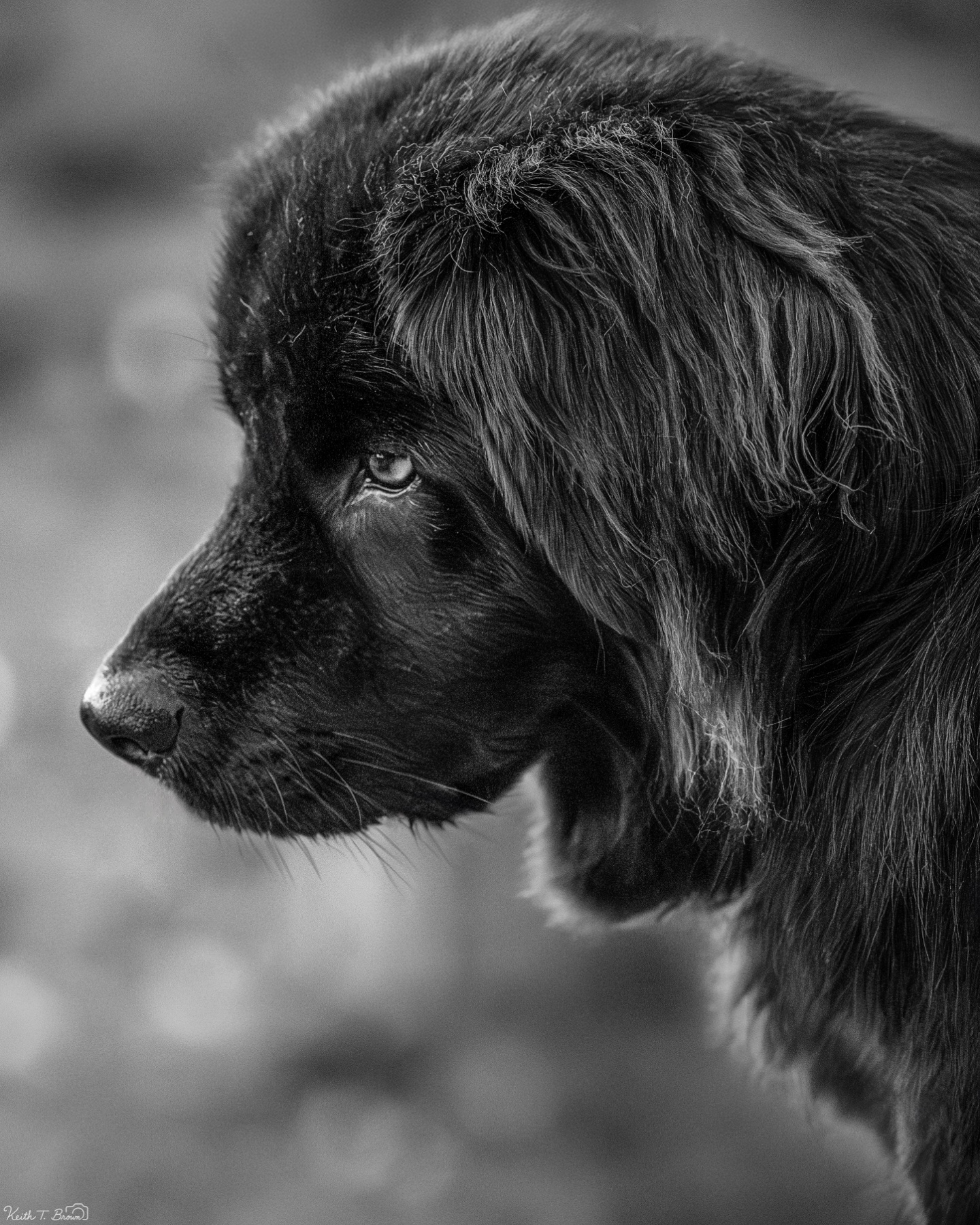
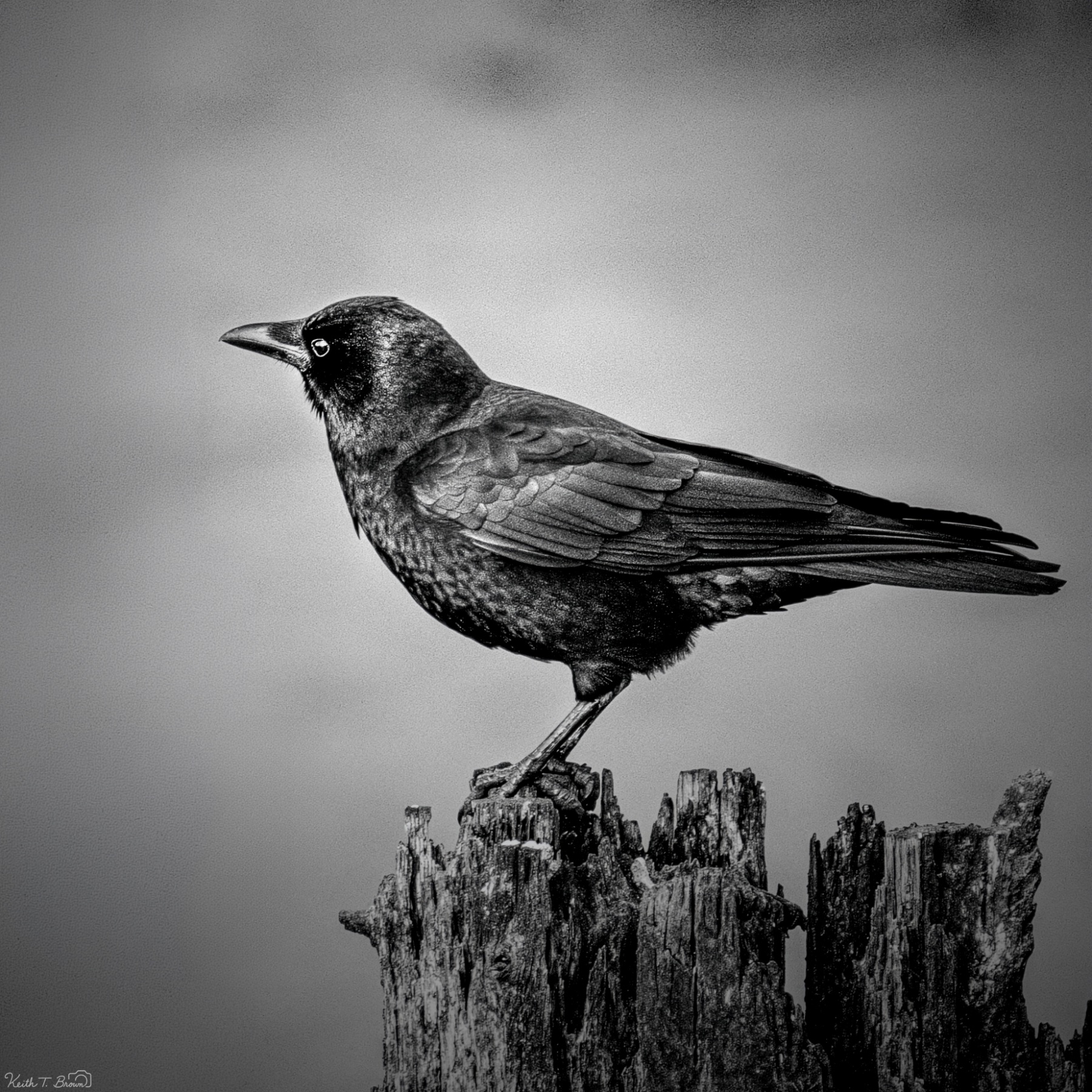
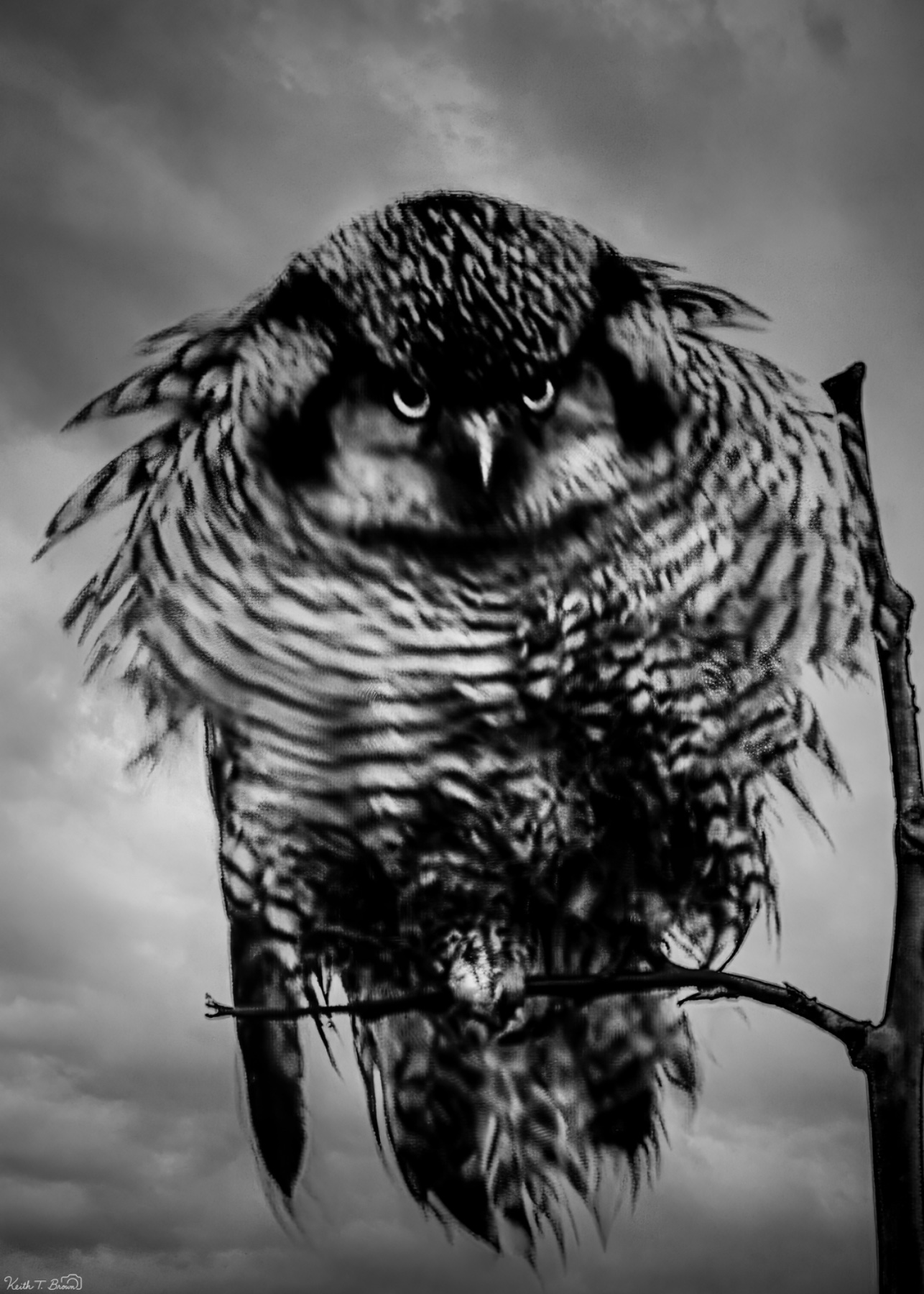
What strikes me first across this set is your patience with the sitter — even when the sitter is a wild thing that hasn't agreed to sit. The rabbit in the opening frame holds you with a fully engaged eye, and you've earned that engagement; the body is squared enough to read as a portrait rather than a wildlife grab, and the surrounding grasses are reduced to tonal texture rather than competing detail. The Newfoundland in the second image is the clearest portrait in the sequence — that profile, the wet sheen along the muzzle, the eye catching just enough light to lift out of the black mass of fur. This is the kind of restraint I respond to: nothing showy, just a creature held in considered light. The corvid on the weathered post in the third frame works on the strength of silhouette and the textural conversation between feather and rotting wood, and the closing owl is the most aggressive read of the four — a confrontational, frontal stare that pushes from portrait toward icon.
Where I'd push you: the relationship between you and each subject is strongest in image two and weakest in image four. The owl is dramatic, but the heavy processing — those crushed blacks, the painterly halation around the feathers — is doing more of the talking than the bird is. I'd trust the animal more and the post-production less. Let the eye do the work. The rabbit frame, while accomplished, sits in the conventional wildlife idiom; consider whether a tighter crop, closer to the head and shoulder, would shift it from "rabbit photographed well" into "portrait of this rabbit." The corvid is graphically strong but slightly distanced — the eye is small in the frame, and a portrait lives or dies on the eye.
Across the four, I'd also encourage you to think about consistency of intimacy. Right now the dog is a portrait and the others are closer to studies. If the project is genuinely B&W animal portraits, the unifying question is: did you and the animal meet? Push every frame toward that meeting — closer, quieter, eye-led — and the set will cohere as portraiture rather than monochrome animal photography, which is a different and less interesting category.
MarrowLensWideOpen Curator
AuthenticatedLensWideOpenMay 23, 2026 · 11:08 PM UTC