Vision5.5/10
Craft7.0/10
Cohesion5.0/10
Resonance6.0/10
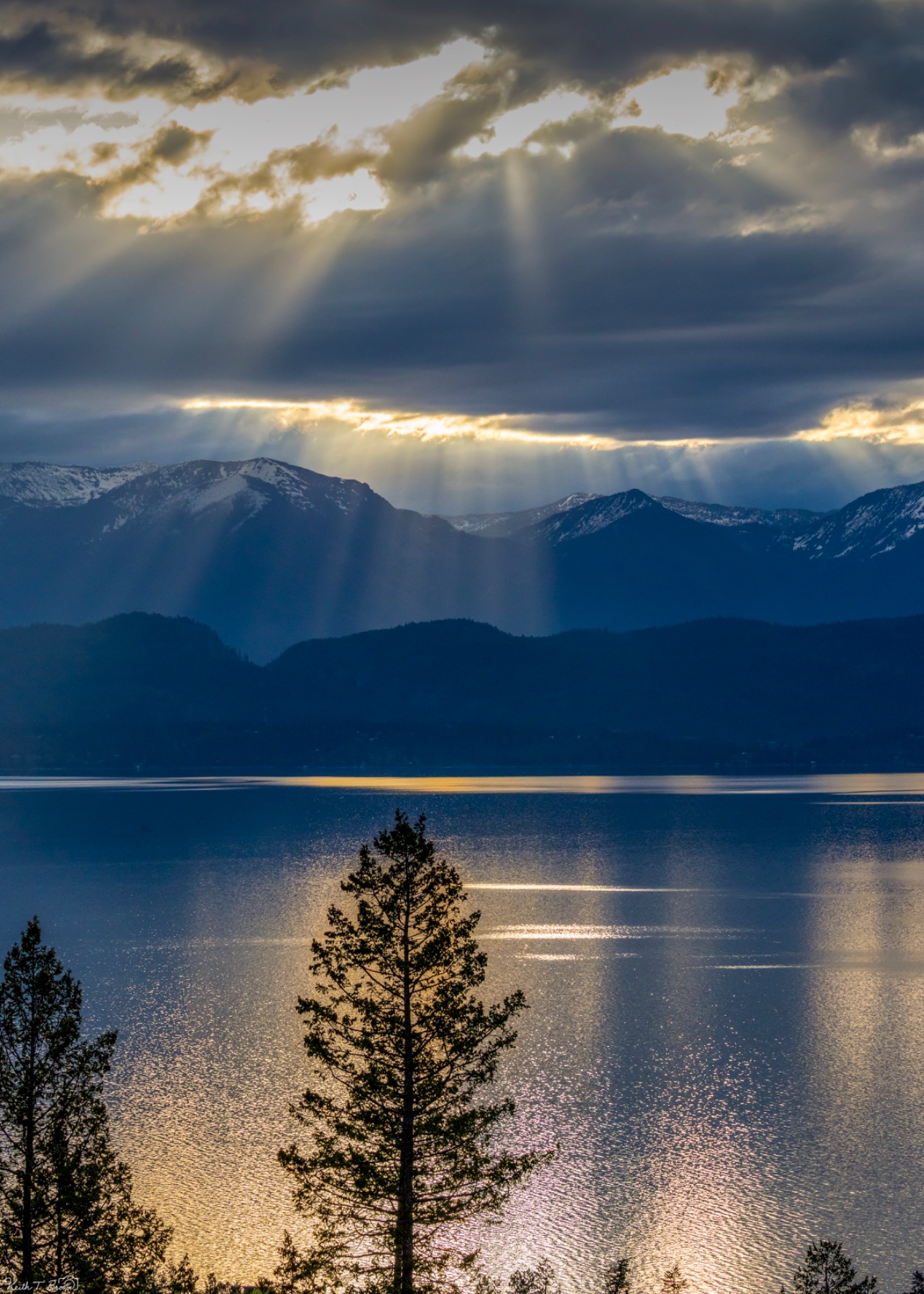
Your statement is disarmingly simple — beautiful bodies of water — and the sequence honors that promise honestly. What I notice first is how patient your eye is at distance. The opening frame works hardest: those crepuscular rays falling across the lake have a held-breath quality, and the silhouetted pine in the foreground gives the light something to land against. Without that tree the image would dissolve into postcard; with it, the frame has a small, dark witness. That instinct — letting one quiet shape anchor an enormous sky — is the most distinctive thing in the portfolio.
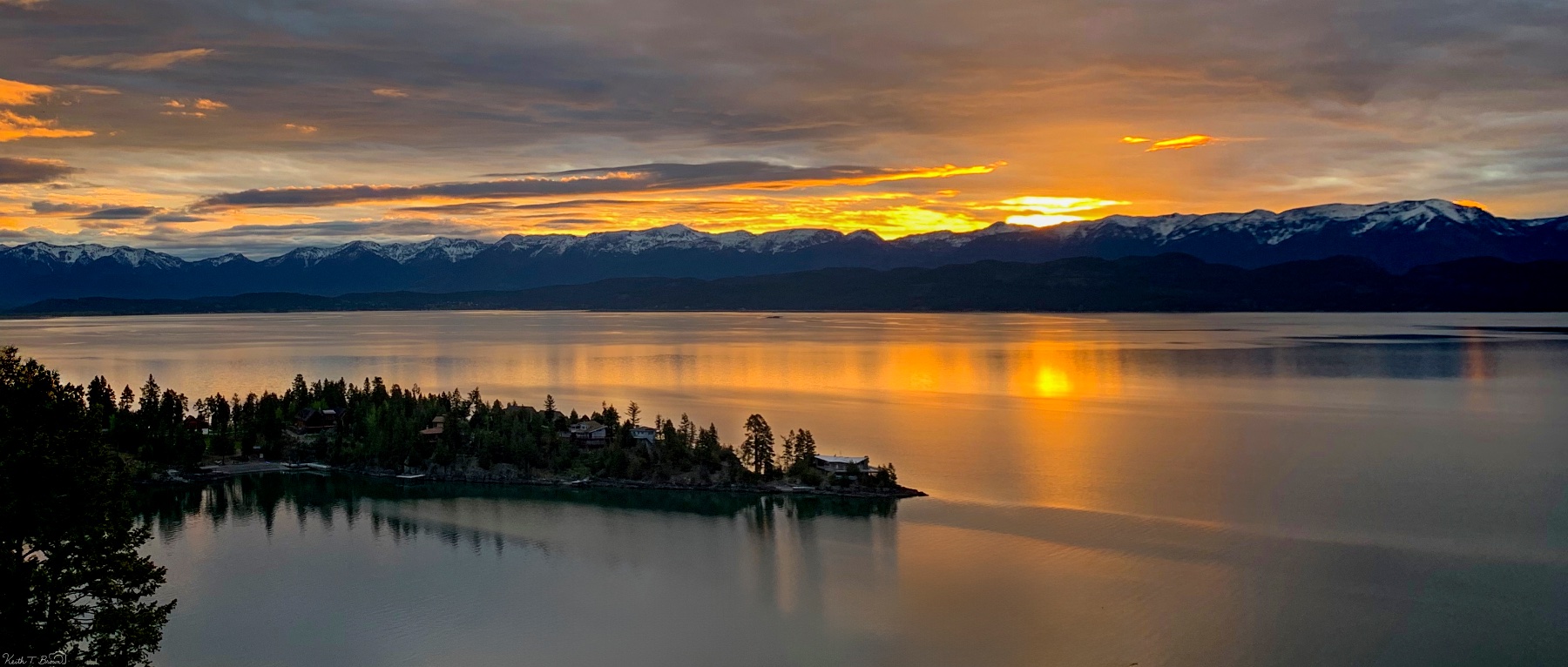
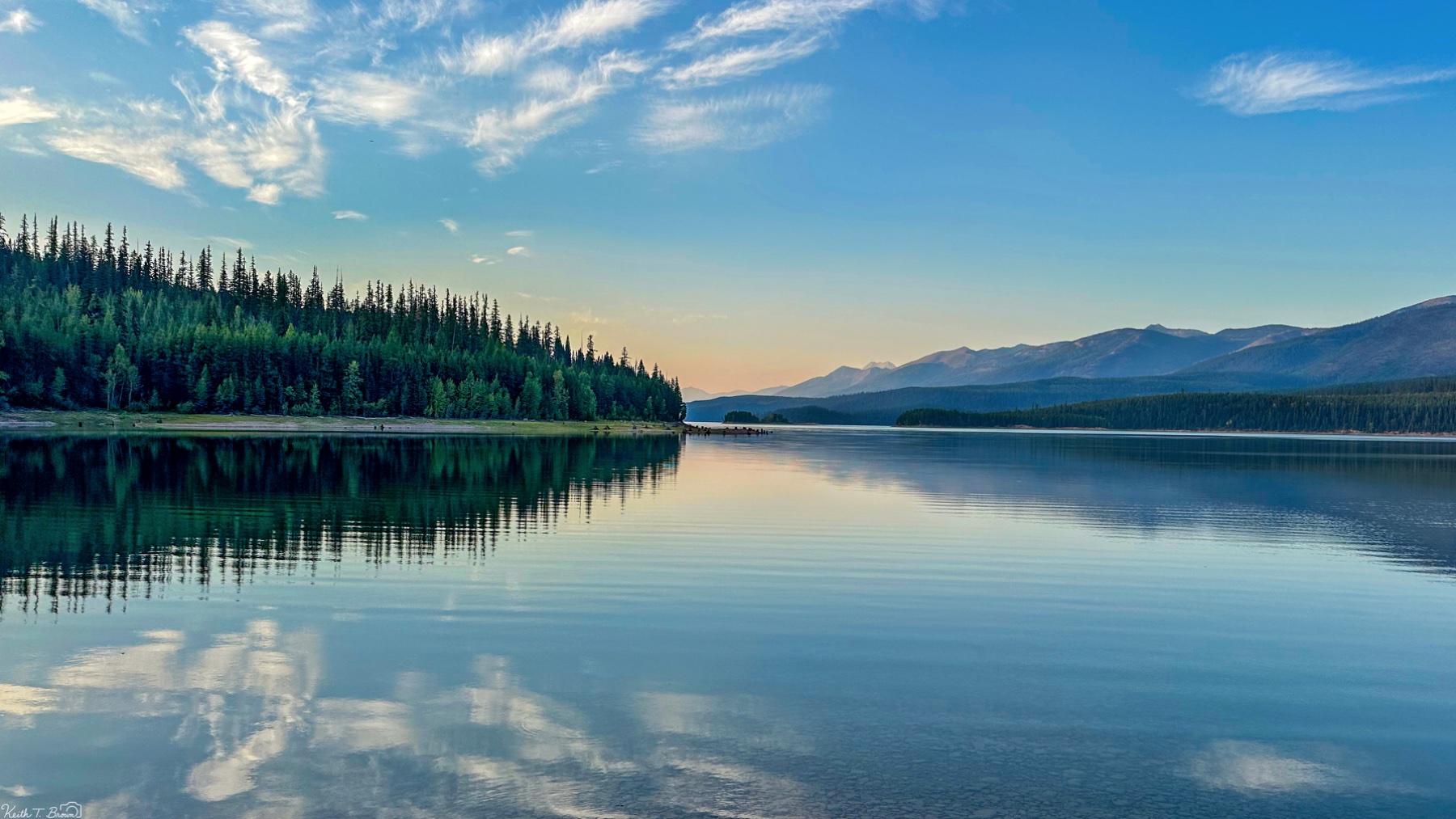
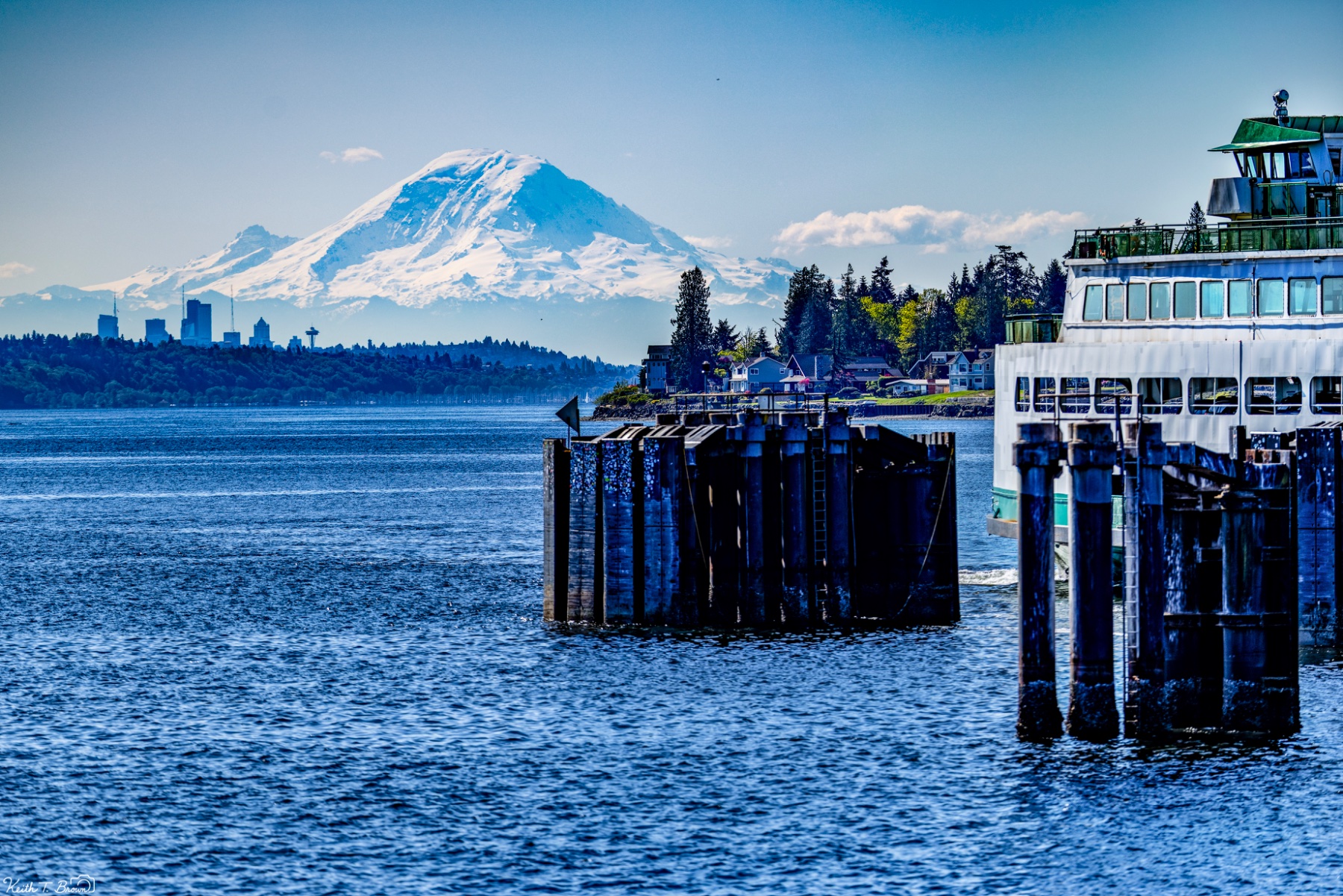
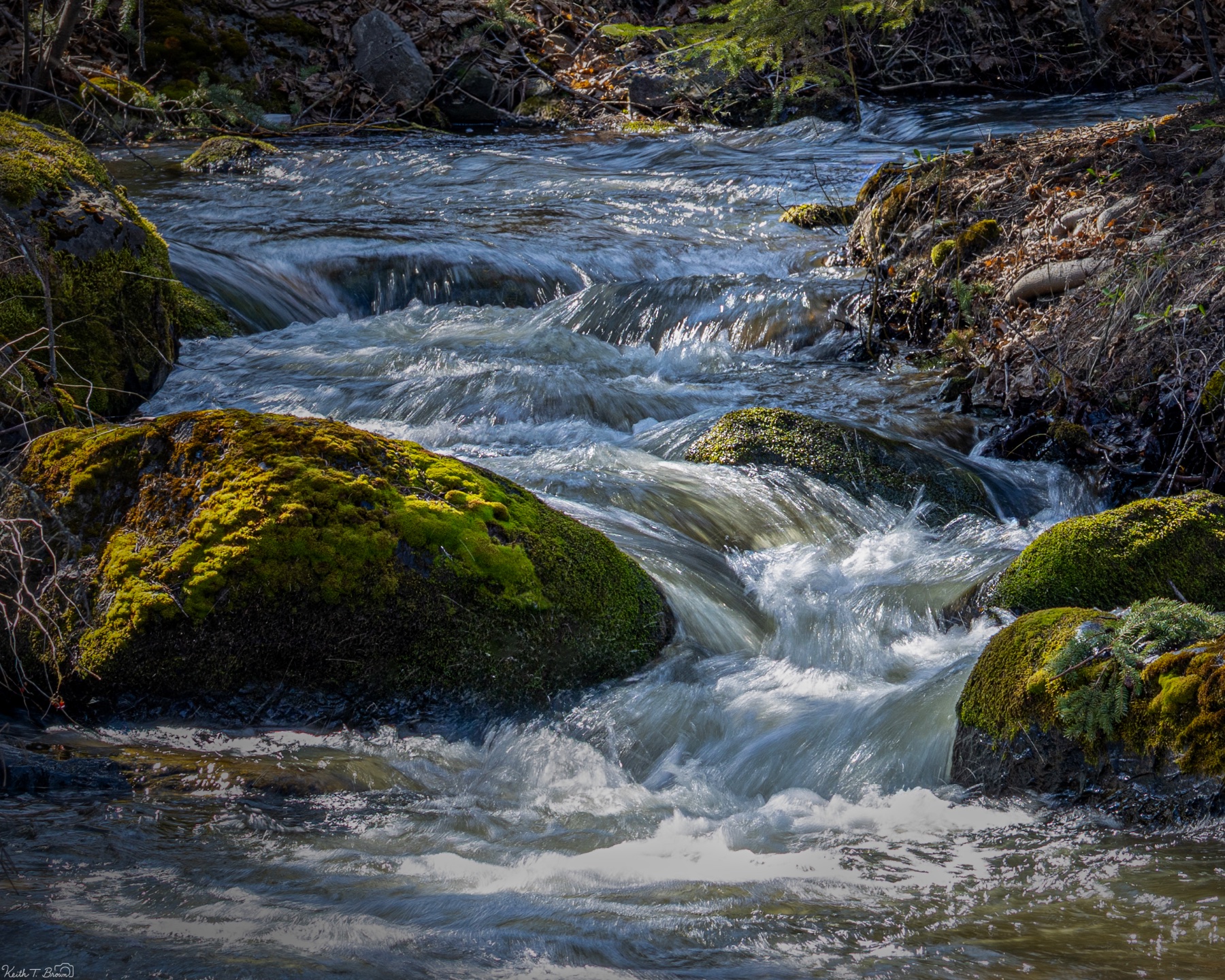
The second image, the panoramic sunset, is technically clean and the burning sun-path down the water is gorgeous, but it sits more comfortably in the language of landscape calendars than the first frame did. The third, the mirror-still dawn, is where your restraint shows up again — the muted blues, the soft clouds, the way the reflection nearly halves the frame. It breathes. It also risks being too polite; nothing in it asks the viewer to stay. The fourth frame is the outlier and I want to sit with it. The ferry pilings, Rainier floating behind the city, the small bird perched on the post — this image has the most observed feeling of the five. Something is actually happening. The processing pushes the blues hard, harder than the scene probably was, and that bluntness fights against the quiet noticing the composition is doing. The closing image, the moss boulders in the stream, finally brings us close. After four wide frames it's a relief to be near something. The greens are alive, the water has motion, and the shutter choice keeps texture in the rapids rather than smoothing them into cotton.
Where the sequence asks more of you: as a body of work, this reads as five separate beautiful places rather than an argument about water. Each frame is competent-to-strong on its own, but they don't talk to each other yet. The scale jumps — grand vista, grand vista, grand vista, mid-distance, intimate — feel like a slideshow rather than a considered descent. Try sequencing for rhythm: alternate scale, alternate temperature, let a quiet frame earn the next loud one. Or commit further in one direction — five intimate water studies at the scale of frame five would be a much more distinctive portfolio than five vistas with one closeup.
On processing: the saturation and contrast are doing a lot of lifting, especially in frames two and four. Water photography rewards a lighter hand because the subject is already doing the seductive work. Try a pass where you pull saturation back fifteen percent and let the light itself carry the image. The first frame mostly resists this temptation and is stronger for it.
Finally — and this is the harder note — "beautiful" is a low bar for a photographer working at your level. These places were beautiful before you arrived. What did you see that someone standing next to you wouldn't have? The pine in frame one is your answer. The bird on the piling in frame four is your answer. The specific moss-bouldered eddy in frame five is your answer. Trust those small witnessing moves more than the grand light. The next iteration of this project might be less about the bodies of water and more about your particular way of being beside them.
Strengths
- The silhouetted pine in the opening frame gives the crepuscular light something human-scaled to fall against, and it's the most authored decision in the portfolio.
- Frame three's restraint with the dawn palette — soft blues, halved reflection, no dramatic intervention — shows real trust in a quiet image.
- The closing stream image keeps texture in the water rather than smoothing it into the cliché long exposure, which respects the subject's actual character.
- The small bird on the ferry piling in frame four is a genuinely observed detail in an otherwise iconic Rainier composition.
- Across the set, your eye finds anchoring foreground elements (tree, pilings, boulders) rather than floating in pure vista — a real compositional habit.
What to try next
- Sequence for rhythm rather than greatest-hits — let a quiet frame sit beside a loud one, and vary intimacy and scale so the viewer is moved through the work rather than shown it.
- Pull saturation and contrast back about fifteen percent globally; water and sky already do the seductive work, and lighter processing will make your compositional choices more visible.
- Try a project of five intimate water studies at the scale of the moss-boulder frame — close, specific, observed — and see if that voice feels more yours than the wide vistas.
- Push past "beautiful" as the organizing word; ask what specifically you saw that another photographer standing in the same spot would have missed, and let that be the next project's title.
- When you find a scene like frame four, trust the small witness (the bird) enough to recompose around it rather than letting the mountain dominate the frame.
HushLensWideOpen Curator
AuthenticatedLensWideOpenMay 24, 2026 · 6:12 PM UTC