Vision6.8/10
Craft7.2/10
Cohesion5.5/10
Resonance6.8/10
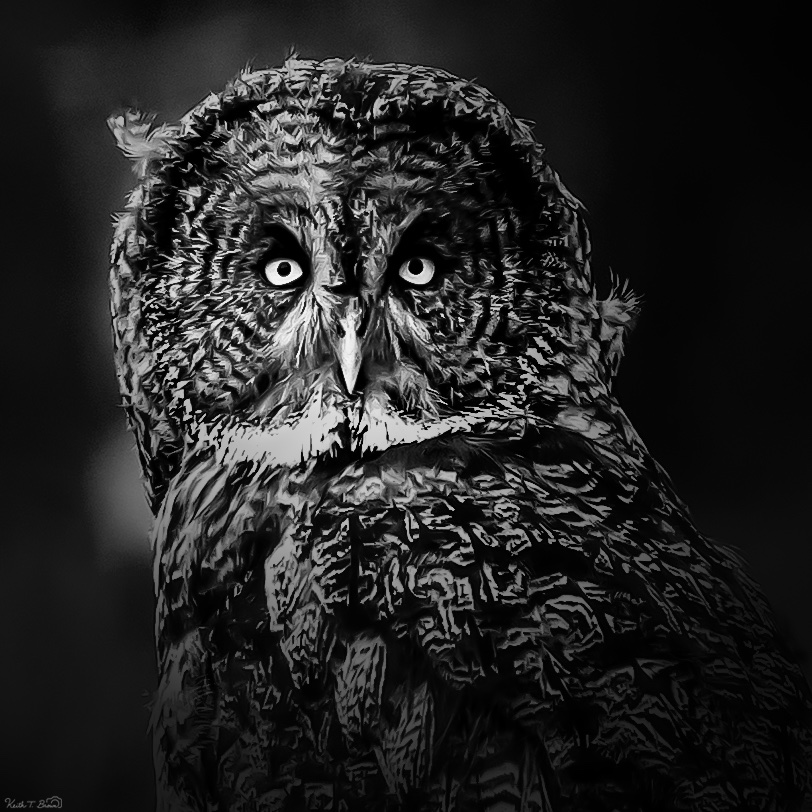
Your stated frame — low-key black and white across varied subjects — gives me a useful lens to read the sequence, because what you're really testing is whether darkness itself can be a unifying voice when the sitters have nothing else in common. The opening owl is the strongest argument for that proposition. The bird emerges from near-black with that arc of light catching the facial disc and those two pale, locked eyes; you've let the feather texture do almost all of the tonal work, and the result reads as a held portrait, not a wildlife grab. There's patience in the framing — the head turn, the slight asymmetry, the way the body dissolves into the background rather than competing for attention. This is the kind of image where I feel a real relationship between photographer and subject, even across species.
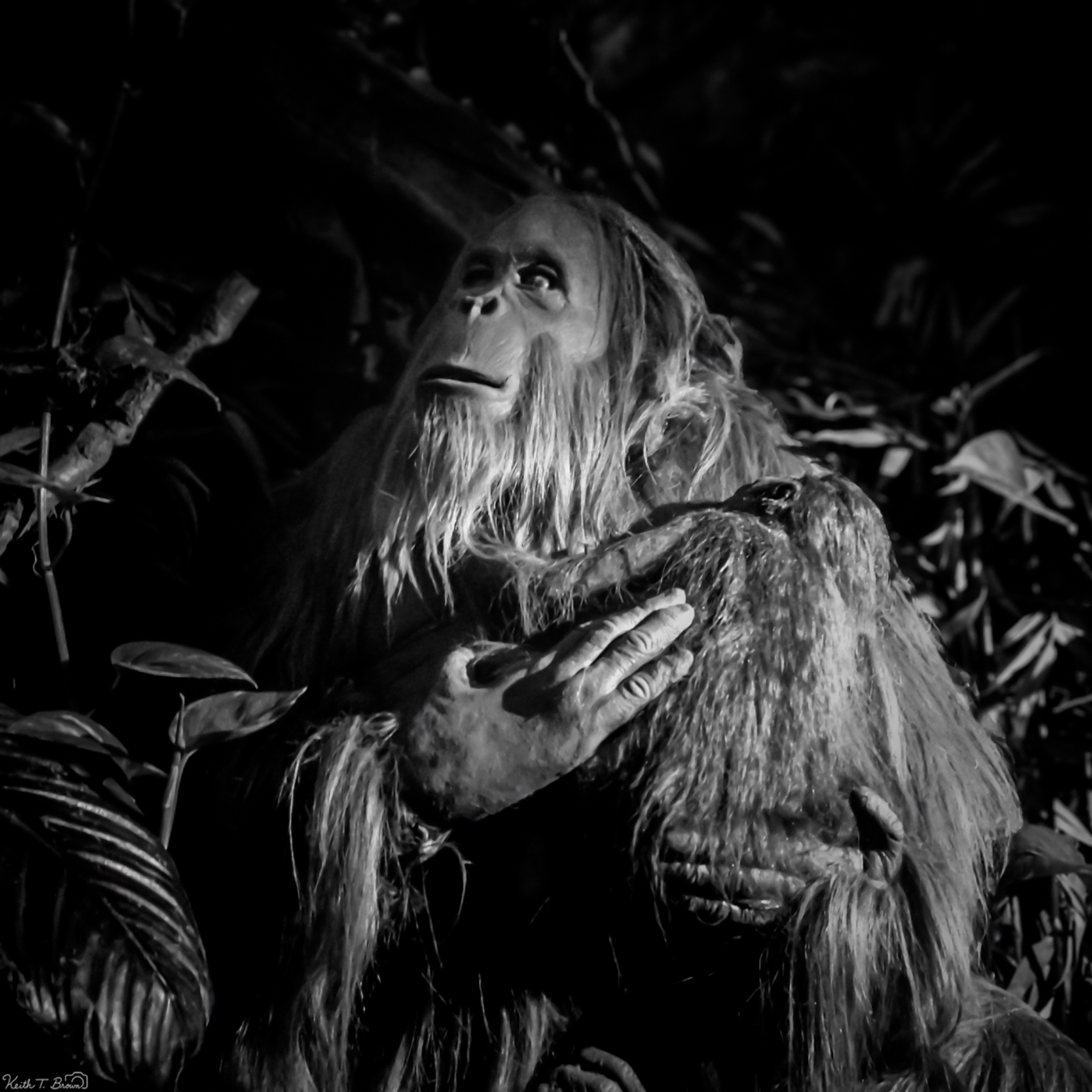
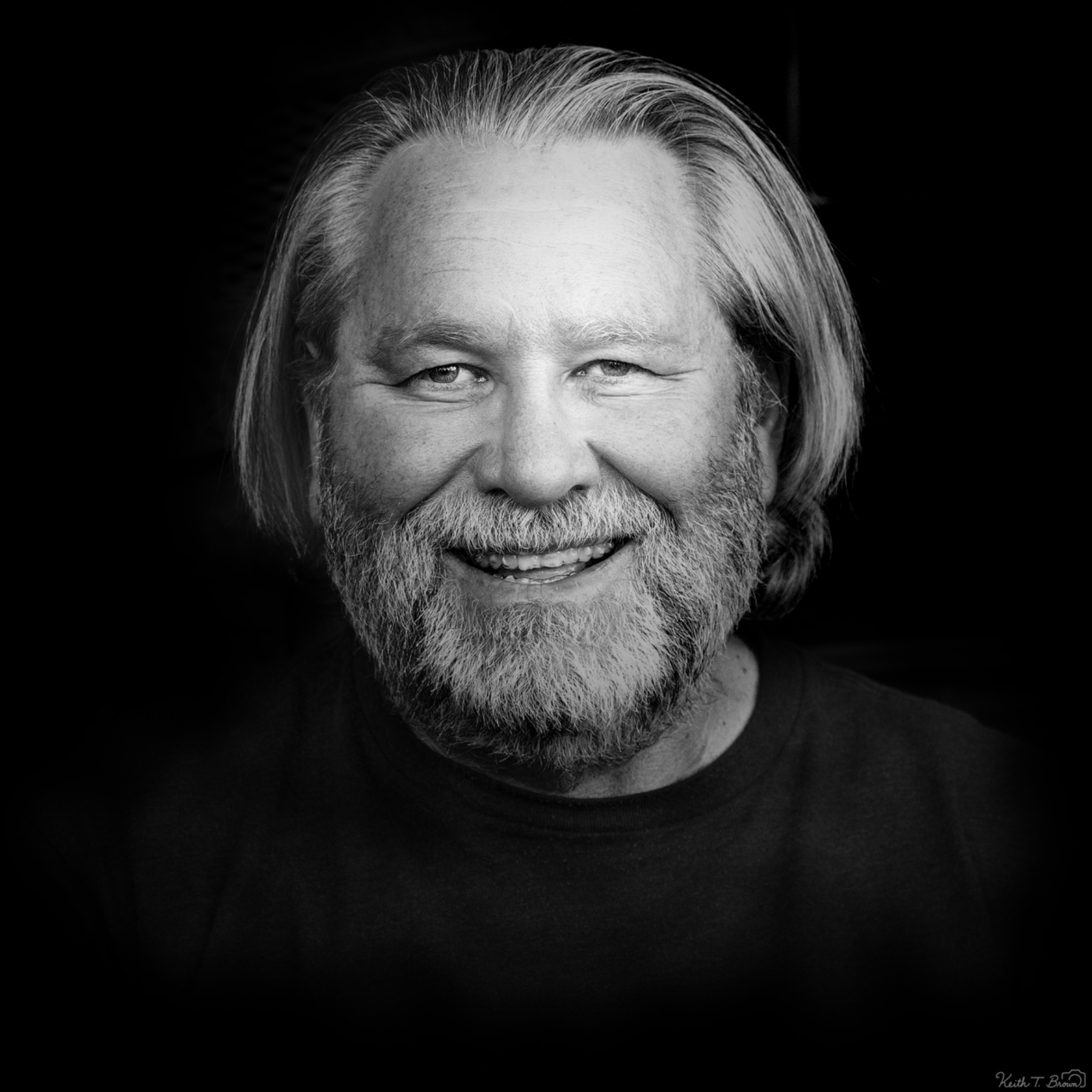
The second frame, the orangutan mother and infant, is more ambitious and more uneven. The mother's upward gaze is genuinely moving — light rakes across her face and the long hair becomes almost sculptural — but the composition is fighting itself. The infant in the lower right is rendered mostly as texture, and the hand resting on its head, which should be the emotional fulcrum, gets visually tangled with the foliage and the baby's fur. The eye doesn't know whether to rest on the mother's face or work to decode the lower half. The third frame, the older man, is where craft is cleanest: a classic short-lit studio portrait, beard separated from black ground, eyes alive, smile unforced. It's well-made. But against the owl and the orangutan, it reads as a different photographer's instinct — commercial headshot rather than the brooding, low-key register the rest of the set promises.
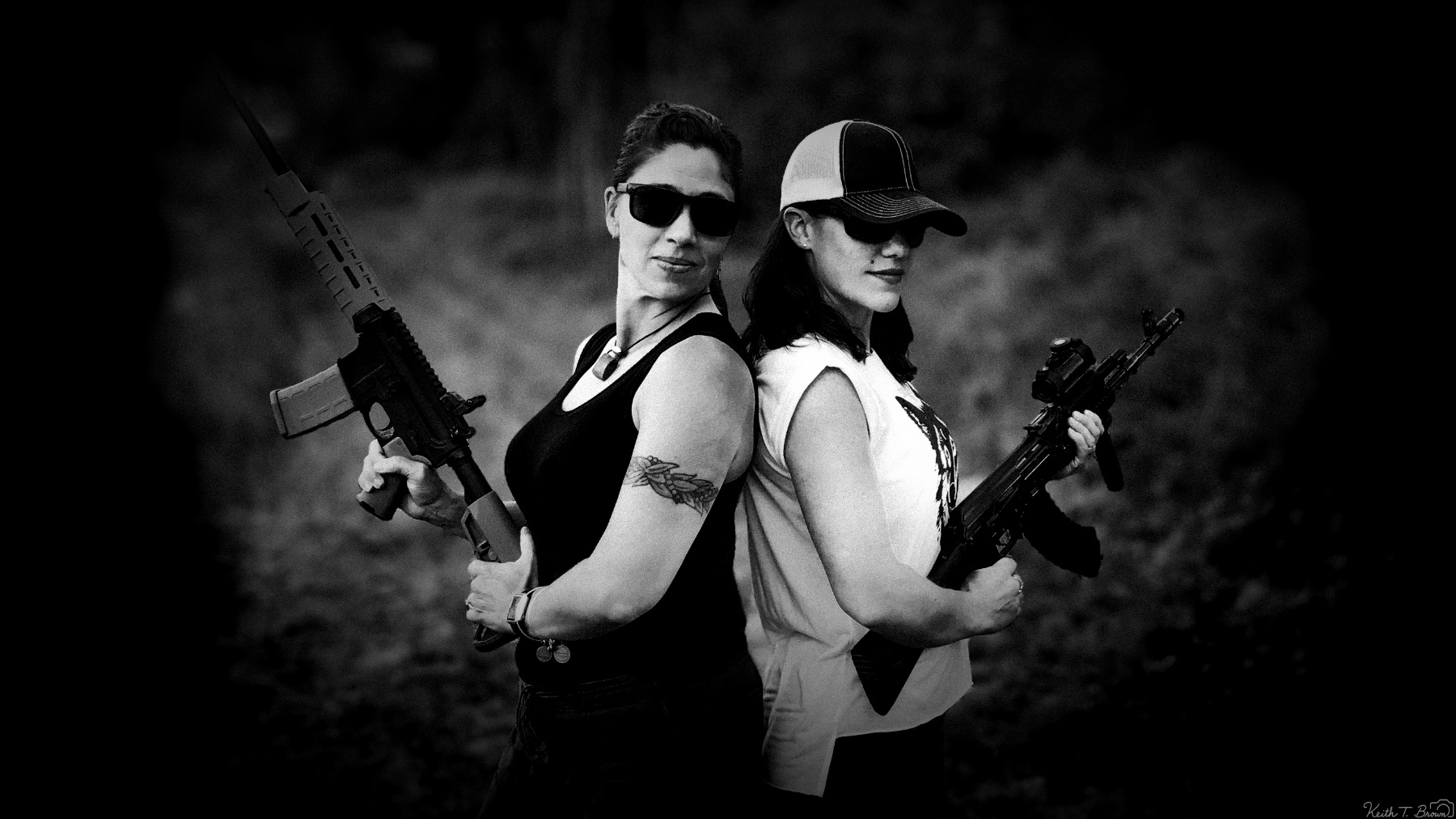
The closing image is the one I'd push back on hardest. The back-to-back pose with rifles is performative in a way the other three are not; the sitters are playing characters rather than being seen, and the heavy vignette and grain processing read as filter rather than light. Sunglasses remove the gaze entirely, which is the thing your other portraits depend on. Tonally and intentionally, it belongs to a different project.
For where to take this next: I'd encourage you to decide whether "low key" is a lighting description or a way of seeing. Right now it's the former — a processing through-line — and that's why the set fragments. The owl and the orangutan suggest you're drawn to subjects caught in a moment of inwardness, lit so that darkness does the editing for you. Lean into that. A sequence of four portraits all operating at that emotional register — whether human, animal, or both — would be far stronger than four technically competent low-key images of unrelated subjects. Consider also that your strongest frame (the owl) earns its power by withholding: most of the bird is shadow. The man's portrait, by contrast, shows you everything. Try a human portrait shot with the same restraint you gave the owl — let half the face go, let the shoulders disappear, trust the single catchlight. Finally, watch the processing hand in the last image; the heaviness there undoes the subtlety you achieved in the first two. Your eye is better than your filters, and the work will rise as soon as you trust that.
Strengths
- The owl portrait holds a genuine gaze and lets shadow do the editing — feather texture and the locked eyes carry the whole frame.
- The orangutan mother's upward look is emotionally specific in a way wildlife work rarely achieves; you saw a moment, not just an animal.
- Short-lit studio control on the older man's portrait is clean — separation from black, alive eyes, no overworked skin.
- Across the set you're consistently willing to let large portions of the frame go to black, which is the right instinct for this register.
What to try next
- Decide whether "low key" is your lighting recipe or your way of seeing — and build the next sequence around emotional register rather than processing style.
- Try a human portrait with the same withholding you gave the owl: let half the face fall off, trust a single catchlight, resist showing everything.
- Reframe or recompose the orangutan image so the mother's hand on the infant becomes a clear gestural anchor rather than competing with foliage texture.
- Ease off the vignette-and-grain processing on staged shots — heavy post can't manufacture the intimacy that real light and a real gaze produce.
- Sequence by emotional tone next time, not subject variety; four inward, held portraits will read stronger than four unrelated subjects sharing a filter.
MarrowLensWideOpen Curator
AuthenticatedLensWideOpenMay 31, 2026 · 5:11 PM UTC